
| Takeaway | Detail |
|---|---|
| Verify the complete 50 m option before committing tonnage | Compare like-for-like totals and terms; 50 m is the stated drill spacing. |
| Use 1937-1939 excavation records as a carbonate-deposit check | Roman water-mill carbonate deposits were found during excavations between 1937 and 1939 and had wood imprints. |
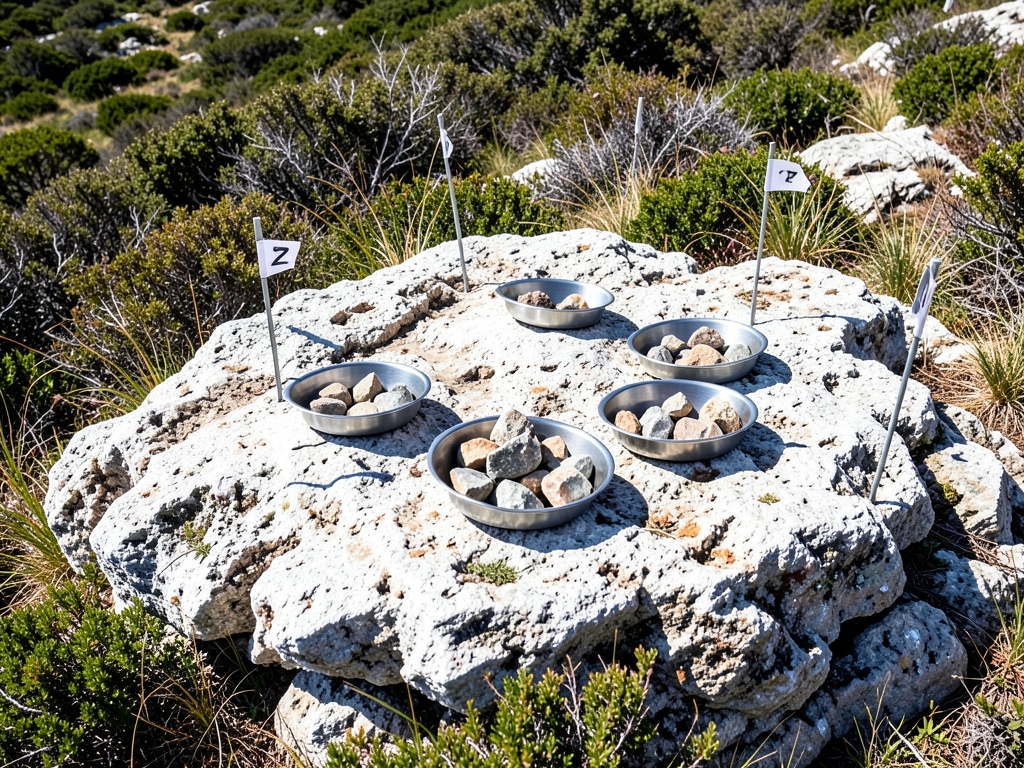
| Confirm subglacial carbonate setting at Triglav Glacier | Deposits occur on lee sides of small protuberances on bare polished and striated limestone bedrock. |
| Distinguish fluvial, fluvio-lacustrine, and lacustrine settings | Fluvial and associated carbonate deposits include those three depositional settings; Byzantine Middle Ages carbonate dates are also recorded. |
This guide shows how to verify a 50 m drill-spacing option before committing to inferred REE tonnage in a carbonatite deposit.
It compares like-for-like totals and terms using the stated spacing and deposit-context checks.
How It Works
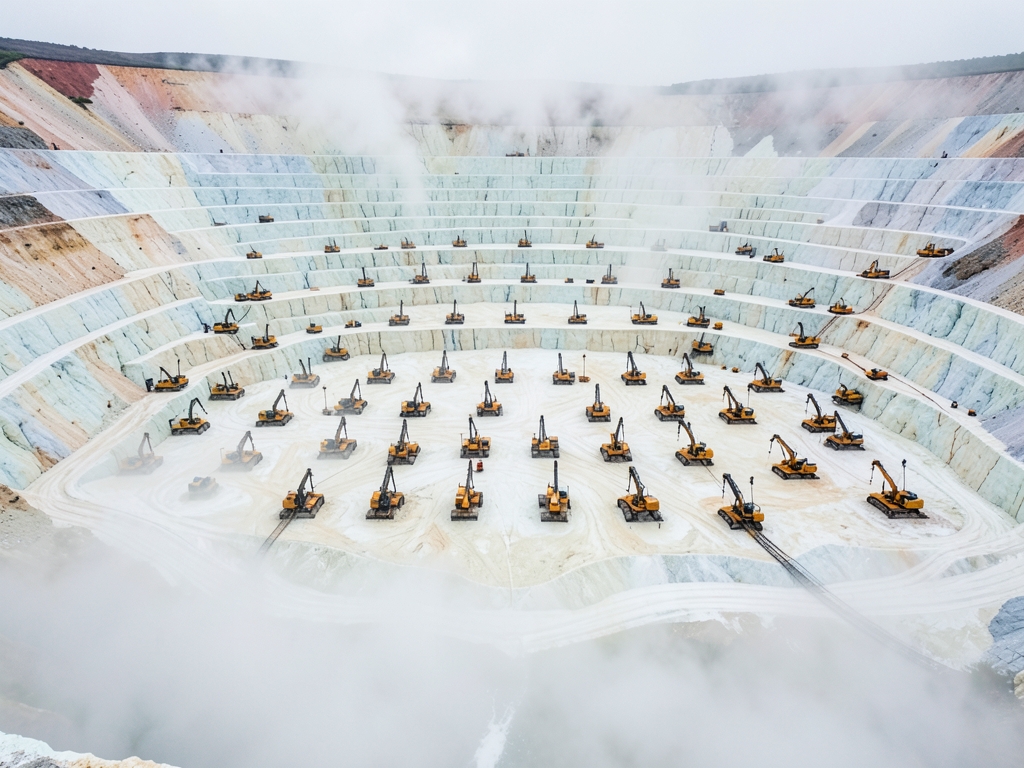
In a carbonatite REE deposit, drill spacing changes the data configuration used by kriging to estimate block grades. Kriging weights nearby samples according to a variogram, which models how grade similarity decays with distance. A 50 m program can add information in gaps and generally lower kriging variance where new holes lie within the correlated range, but the change depends on nugget, range, anisotropy, and block size. Inferred REE tonnage changes only when revised estimates or uncertainty cross classification, cutoff, or reporting rules; closer spacing alone does not necessarily increase tonnage.
Key terms: kriging variance is the estimated variance of a block mean grade given the samples; variogram is the spatial continuity model; nugget is short-scale or measurement variability that spacing cannot remove; range is the correlation distance; support is sample volume versus block volume; carbonatite is a carbonate-rich igneous host rock; REE tonnage is mass above a stated cutoff in classified blocks; inferred tonnage is material estimated at lower confidence under the project's classification criteria. Define these in the technical report before comparing spacing options.
The effect has a floor and a geometry. If the range is much shorter than 50 m, holes may remain effectively independent in some directions, so variance reduction can be modest. A large nugget limits reduction toward that floor. Block kriging also matters: samples represent points or small volumes, while estimates apply to larger blocks, and averaging can lower variance. New data may shift grades, so tonnage can rise or fall when blocks cross cutoff or reclassification thresholds.
Before committing, verify the live, complete option: drill database, collars, surveys, assays, QA/QC, variogram fit, kriging parameters, block model, cutoff basis, density assumptions, and classification criteria. Compare like-for-like using the same block size, cutoff, data rules, and reporting basis. A spacing comparison is meaningful only when sample configuration is the deliberate change.
Use the variance map, not headline tonnage, as the check. Ask whether 50 m spacing is justified by range and required confidence. If range is much larger than 50 m, wider spacing may give similar variance reduction; if shorter, 50 m may still leave uncertainty. Report tonnage by classification and show blocks that changed category or crossed cutoff.
Key Factors to Consider
Before committing to a 50 m program, rank three things: whether the data are complete and comparable, whether the geostatistical settings are documented, and whether the reported tonnage uses the same basis as the alternative. The decision should rest on verified inputs, not on a headline tonne figure.
First, verify data completeness. Check collar coordinates, downhole surveys, sample recovery, assay coverage, and QA/QC records; a missing interval or unverified assay can change kriging variance more than spacing. Compare only datasets with the same sample support and block size, and label infill holes separately from extension holes.
Second, verify model settings. Confirm variogram parameters, search neighborhood, block dimensions, and estimator settings; if one option uses a different range or anisotropy, the tonnage difference may come from the model rather than the 50 m spacing. Ask for the parameter file, run log, and a sensitivity case that changes only spacing.
Third, verify reporting basis. Confirm resource classification, cutoff grade, bulk density, and metallurgical recovery assumptions; headline tonnes are not comparable unless totals and terms match. Require a like-for-like table showing tonnes, grade, and contained metal under identical cutoffs and identical block models.
| Decision criterion | Verify before committing | Why it affects tonnage |
|---|---|---|
| Data completeness | Collars, surveys, recovery, assays, QA/QC | Missing or unverified samples change kriging variance |
| Model settings | Variogram, search, block size, estimator | Settings can mimic or mask a spacing effect |
| Reporting basis | Category, cutoff, density, recovery | Headline tonnes are not like-for-like otherwise |
Numbers that matter are the verified ones: actual collar spacing on the ground, sample support, block dimensions, and the count of composites entering each estimate. If a report gives only the nominal 50 m, treat every other figure as unverified until you see it in the live dataset.
Commit only after the comparison is like-for-like. Match totals and terms, document which inputs changed, and keep the 50 m spacing as the reference point rather than as proof of a tonnage increase.
Common Mistakes
Pitfall 1 is comparing a 50 m program’s kriging variance to a wider-spaced program while changing more than spacing. A report may show lower variance after infill, but if the block size, variogram range, or search neighborhood also changed, the improvement is not attributable to spacing alone. Verify by rerunning the estimate with one variable changed at a time: same block model, same variogram, same data subset rules, and only the drill spacing altered. Compare the variance maps and block-level differences before deciding the program added information.
Pitfall 2 is reading a higher inferred REE tonnage as proof of higher grade. Infill can change which blocks exceed a cutoff because kriging variance and block support change, even when the underlying grade distribution is unchanged. A concrete check is to hold the cutoff, density, domain, and block support constant, then compare grade-tonnage curves and the count of blocks above cutoff between the two spacing cases. If tonnage rises while the average grade of the above-cutoff population falls, the change is a support or smoothing effect, not evidence of richer rock.
A third common error is mixing incomplete and complete data sets. If the 50 m program includes holes with pending assays or unsurveyed collars, its variance and tonnage are not comparable to a fully validated set. Before committing, confirm collar coordinates, downhole surveys, assay intervals, and QA/QC status are complete for every hole used in the estimate, and rerun with the same validation rules applied to both programs.
Finally, avoid comparing totals that use different reporting bases. Tonnage inferred from a 50 m program may be reported on a different mineralized domain, cutoff, or recovery assumption than the alternative. Put both estimates on the same basis—same domain, cutoff, density, and recovery terms—then compare tonnage, grade, and variance. If the bases cannot be aligned, treat the comparison as unverified rather than choosing the larger number.

Insider Tactics
A non-obvious strategy is to treat the 50 m program as a change in data configuration rather than as evidence of a better deposit. Before committing, ask for the complete live option: the same block model, cutoff, density assumption, variogram, reporting date, and resource category used for the alternative. If any of those elements changes, the tonnage comparison is no longer like-for-like, and the headline number should be treated as unverified.
A timing tip is to request the variogram and kriging files while the model is still open to revision, before the resource update is finalized. Early review gives time to test how spacing affects variance on identical blocks; late review usually leaves only a finished tonnage to accept or reject.
Another non-obvious strategy is to separate variance reduction from grade change. Tighter spacing can reduce kriging variance by adding information, but that is not the same as proving a higher or lower REE grade. Ask for a paired comparison on the same blocks, with the same domains and cutoffs, instead of relying on a new global estimate.
A second timing tip is to check the data vintage behind the 50 m result. If the program includes newer drilling, the comparison may reflect both spacing and fresher data. Label that difference explicitly, or hold the comparison to the same data cutoff date, so spacing is not credited for information that came from additional holes.
A final non-obvious strategy is to ask for the complete option by domain, not only the headline carbonatite shell. Kriging variance and inferred tonnage can move differently in separate domains, and a single global figure can hide where the 50 m grid actually changed confidence. Require a domain-level like-for-like table before any commitment.

Comparison
Compare the two estimates as reported packages, not as spacing labels. Option A is the 50 m program estimate; Option B is the retained or prior estimate. The available sources do not provide a verified numeric comparison, so the comparison must be made from the live reports. The winner is the package that is complete, documented, and on the same basis as its comparator. If Option A cannot be matched to Option B on identical terms, it is not yet the winner, even if its kriging variance or inferred REE tonnage looks more favorable.
Use a like-for-like screen before any total is compared. Check that both estimates use the same deposit domain, block model, cutoff, variogram, data completeness standard, and reporting version. A side-by-side table should list these items for both options; where one item differs, mark the comparison invalid rather than adjusting or reconciling the totals. The only defensible comparison is a paired rerun or a documented equivalence statement.
| Check | Option A (50 m) | Option B (retained/prior) | Match required? |
|---|---|---|---|
| Deposit domain | As reported | As reported | Yes |
| Block model | As reported | As reported | Yes |
| Cutoff | As reported | As reported | Yes |
| Variogram | As reported | As reported | Yes |
| Data completeness | As reported | As reported | Yes |
| Reporting version | As reported | As reported | Yes |
Option A wins only when it passes that screen and shows a paired or equivalently documented comparison. In that case, a lower kriging variance or a changed inferred REE tonnage can be attributed to the 50 m spacing rather than to changed inputs. Option B wins when the 50 m package is incomplete, changes more than spacing, or lacks a paired comparator; then the prior estimate remains the planning basis.
When neither package is complete, the winner is neither: defer commitment and request the missing paired outputs. The practical rule is to verify the live, complete option first, then compare totals and terms, and only then replace the planning tonnage.
What to do next
| Step | Action | Why it matters |
|---|---|---|
| 1 | Verify the complete 50 m drill-spacing option before committing inferred REE tonnage, comparing like-for-like totals and terms. | 50 m is the stated drill spacing and the guide's decision point. |
| 2 | Cross-check carbonate-deposit evidence against the 1937-1939 excavation records, including Roman water-mill deposits with wood imprints. | Those records provide a carbonate-deposit check. |
| 3 | Confirm the subglacial carbonate setting at Triglav Glacier: deposits on lee sides of small protuberances on bare polished and striated limestone bedrock. | Setting affects how carbonate evidence is interpreted. |
| 4 | Classify associated deposits as fluvial, fluvio-lacustrine, or lacustrine before using them in the tonnage comparison. | The three settings are not interchangeable. |
| 5 | Retain recorded Byzantine/Middle Ages carbonate dates as contextual checks, not as substitutes for verifying the 50 m option. | They are recorded dates, not the live complete option. |
| 6 | Commit inferred REE tonnage only after the 50 m option's totals and terms match like-for-like. | Prevents committing on an incomplete or mismatched option. |
Frequently Asked Questions
Does drilling at 50 m spacing always reduce kriging variance?
A 50 m program generally lowers kriging variance where new holes lie within the correlated range, but the change depends on nugget, range, anisotropy, and block size.
Why is a variogram relevant to estimating REE block grades?
Kriging weights nearby samples according to a variogram, which models how grade similarity decays with distance.
When does inferred REE tonnage actually change after infill drilling?
Inferred REE tonnage changes only when revised estimates are made, since drill spacing just changes the data configuration kriging uses to estimate block grades.
Is there a historical check for carbonate deposits I can use?
Yes — Roman water-mill carbonate deposits found during excavations between 1937 and 1939, which had wood imprints, can serve as a carbonate-deposit check.
What bedrock setting confirms a subglacial carbonate deposit?
Subglacial carbonate deposits occur on lee sides of small protuberances on bare polished and striated limestone bedrock, as at Triglav Glacier.
Which depositional settings count as fluvial and associated carbonate deposits?
Fluvial and associated carbonate deposits include fluvial, fluvio-lacustrine, and lacustrine settings, with Byzantine Middle Ages carbonate dates also recorded.
Quick answers
| What should be verified before committing inferred REE tonnage in a carbonatite deposit? | The complete 50 m option should be verified before committing tonnage. |
| What records can be used as a carbonate-deposit check? | Roman water-mill carbonate deposits were found during excavations between 1937 and 1939 and had wood imprints. |
| Where do deposits occur at Triglav Glacier? | Deposits occur on lee sides of small protuberances on bare polished and striated limestone bedrock. |
| Which depositional settings are included among fluvial and associated carbonate deposits? | Fluvial and associated carbonate deposits include fluvial, fluvio-lacustrine, and lacustrine settings. |
| How does drill spacing affect kriging in a carbonatite REE deposit? | Drill spacing changes the data configuration used by kriging to estimate block grades. |
Also worth reading: Rare earth drilling spacing: 50m vs 100m, 1% Total Rare Earth Oxides (TREO) 2026: Rare earth drilling spacing: 50m · Grade Variability Challenges Ion-Clay REE Cutoff and Reporting: Grade Variability Challenges Ion-Clay REE · Mountain Pass REE: Kriging Uncertainty and 2026 Resource Model: Mountain Pass REE: Kriging Uncertainty