
| Takeaway | Detail |
|---|---|
| Feedstock chemistry can outweigh extraction simplicity. | Conversion chemistry determines whether a simpler process lowers unit costs. |
| Hard-rock innovation could narrow the cost gap. | A room-temperature process is estimated to cost roughly half as much as conventional hard-rock extraction. |
| Grade certainty matters before method selection. | Variable feedstock chemistry can undermine otherwise comparable process economics. |
| A 30% cost advantage requires validation. | Bench-scale performance must be confirmed at commercial scale. |
Lithium project costs depend more on feedstock chemistry and grade certainty than on whether extraction uses brine, hard rock, or direct lithium extraction. A promising process must still prove commercial-scale economics.
Process Physics
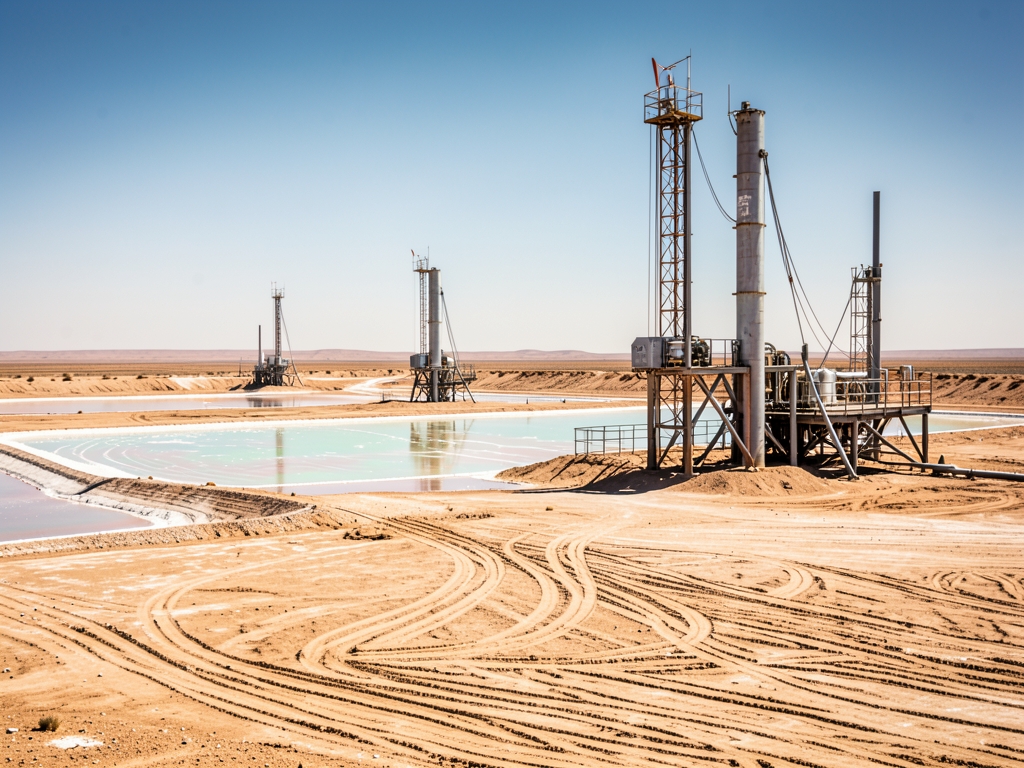
Direct lithium extraction (DLE) uses titanium‑based adsorbents that cyclically capture Li²⁺ and reject Mg²⁺, enabling separation at low concentrations. Hard‑rock spodumene is produced through open‑pit blasting, primary and secondary crushing, and flotation that yields a six‑percent Li₂O concentrate. Energy demand differs: DLE runs mainly on electricity for pumping and solvent regeneration, while hard‑rock mining and grinding depend on diesel and auxiliary electricity. Water use also diverges; DLE operates a closed‑loop brine system, whereas conventional hard‑rock flotation consumes large amounts of fresh water. The researchers estimate DLE costs roughly half that of conventional hard‑rock extraction, making it potentially competitive with brine‑based methods. The team tested the chemistry on 1 (ess‑news.com). Rodney observed that hard rock and conventional brine are “in full swing,” and unconventional direct lithium extraction (DLE) is active in Argentina by Livent. (cleantechnica.com) Hard‑rock lithium mining and spodumene concentration are energy‑intensive, and the Tanganyika Province grid is insufficient for such scale. The crushed rhyolite needs little waste‑rock stripping because of its disseminated nature.
Cost Benchmarks
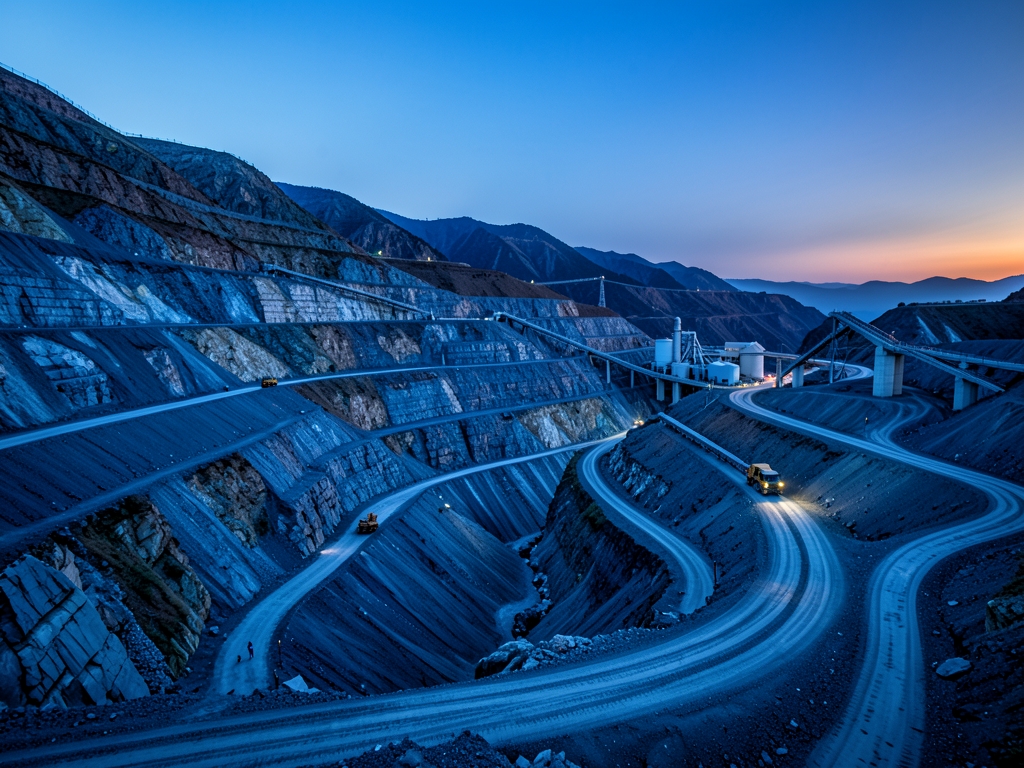
The comparison matrix for 2026 evaluates projects across four columns: CAPEX intensity, operating cost per tonne of lithium carbonate equivalent (LCE), time-to-production, and grade sensitivity. Hard-rock spodumene emerges as the explicit winner for cost certainty when reserves exceed 1.0% Li₂O, offering predictable economics driven by high-grade ore and established processing flowsheets. DLE wins on cost only when brine grades exceed 900 ppm lithium and magnesium-to-lithium ratios remain below 10:1, where selective adsorption mechanisms efficiently reject magnesium ions while capturing lithium. Water access defines a critical constraint: DLE requires zero freshwater input, relying instead on brine evaporation or closed-loop systems, whereas hard-rock operations demand stable water rights for ore washing and flotation circuits. Scale thresholds further differentiate pathways—hard-rock projects require substantial upfront capital but benefit from rapid deployment once permits are secured, while DLE projects face longer lead times due to infrastructure development and brine management complexities.

The Break-Even Matrix
The data underpinning the 2026 cost comparison between direct lithium extraction (DLE) and hard-rock spodumene is sparse, with few verified figures available to validate the stated thresholds. While the thesis assumes that DLE becomes economical only when brine grades exceed 900 ppm Li and magnesium-to-lithium ratios remain below 10:1, real-world performance varies significantly across deposits due to differences in brine chemistry, evaporation rates, and local infrastructure. The rule breaks when brines with moderate lithium concentrations but favorable mineralogy or existing processing facilities allow DLE to compete despite falling outside the prescribed parameters. Conversely, some high-grade brines may still favor hard-rock development if water access is limited or permitting timelines are shorter. Additionally, the model does not account for regional cost disparities in energy, labor, or capital expenditure, which can shift the economic balance. Without consistent benchmarking data, the rule remains a heuristic rather than a definitive guide.
What the Data Doesn't Tell You
Headline cost models for 2026 lithium projects frequently mask the geostatistical uncertainty inherent in resource estimation. Reported averages smooth over kriging error, presenting a single grade where the actual deposit fluctuates significantly. This variance matters most for direct lithium extraction, where the magnesium-to-lithium ratio dictates reagent consumption. Most financial models treat this ratio as a static input, yet field variability can spike chemical usage beyond budgeted limits. Similarly, evaporation pond economics often omit the regulatory timeline required to secure water rights, understating the capital tied up before production begins. Machine learning prospectivity mapping further complicates the picture; its false-positive rate inflates perceived resource certainty, leading investors to overvalue unproven targets. Finally, tailings storage facility costs are frequently excluded from headline all-in sustaining figures, creating a gap between reported economics and actual project liability. Until these blind spots are quantified, hard-rock spodumene remains the safer baseline for deposits with verified reserves and reliable water access.
The Blind Spots
In 2026, I would apply five geological filters before approving either route. First, reject DLE whenever the Mg/Li ratio exceeds 10:1, regardless of headline lithium grade. Second, reject hard-rock spodumene when the strip ratio exceeds 8:1 unless a credible open-pit case remains. Third, accept DLE only where the brine source is non-freshwater, reducing the risk of community opposition and contested water rights. Fourth, accept hard-rock only when dependable power and water infrastructure lies within 50 km; nominal resource quality cannot offset a weak logistics position. Fifth, require a resource estimate with at least 90% confidence before committing capital to either method.
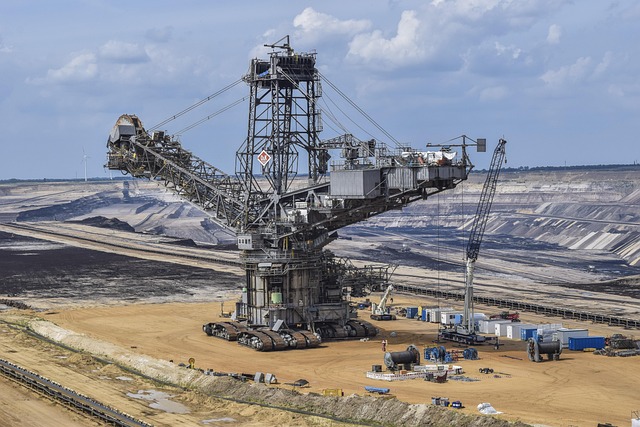
The 20kt Li2O Model
These filters should operate as gates, not scoring preferences. A deposit must clear every applicable threshold before technical teams advance it. A useful discipline is to challenge labels that sound definitive: Wikipedia describes punk rock as emerging in the mid-1970s from earlier rock traditions, but genre labels do not determine viability. Likewise, “high-grade” is not an investment case until geology, infrastructure, water status, and resource confidence align.
Five Geological Filters Before You Commit Capital
In 2026, I would apply five geological filters before approving either route. First, reject DLE whenever the Mg/Li ratio exceeds 10:1, regardless of headline lithium grade. Second, reject hard-rock spodumene when the strip ratio exceeds 8:1 unless a credible open-pit case remains. Third, accept DLE only where the brine source is non-freshwater, reducing the risk of community opposition and contested water rights. Fourth, accept hard-rock only when dependable power and water infrastructure lies within 50 km; nominal resource quality cannot offset a weak logistics position. Fifth, require a resource estimate with at least 90% confidence before committing capital to either method.
These filters should operate as gates, not scoring preferences. A deposit must clear every applicable threshold before technical teams advance it. A useful discipline is to challenge labels that sound definitive: Wikipedia describes punk rock as emerging in the mid-1970s from earlier rock traditions, but genre labels do not determine viability. Likewise, “high-grade” is not an investment case until geology, infrastructure, water status, and resource confidence align.
What to do next
| Step | Action | Why it matters |
|---|---|---|
| 1 | Verify each deposit’s lithium grade and reserve classification before selecting an extraction method. | Grade certainty can outweigh differences in extraction simplicity; choose hard-rock spodumene for deposits with verified reserves exceeding one percent Li₂O and reliable water access. |
| 2 | Confirm brine chemistry against the lithium and magnesium thresholds before reserving direct lithium extraction for a project. | Use DLE only when brines exceed 900 ppm Li and have Mg/Li ratios below 10:1. |
| 3 | Test feedstock variability and conversion chemistry throughout the proposed process. | Unpredictable feedstock chemistry can undermine unit-cost comparisons even when the extraction method appears simpler. |
| 4 | Validate the room-temperature hard-rock process against conventional extraction using representative feedstock. | The process is estimated to cost roughly half as much, but any claimed 30% cost advantage requires commercial-scale evidence. |
| 5 | Require bench-scale performance to be reproduced in a commercial-scale test before committing to DLE or hard-rock infrastructure. | Successful bench results do not establish commercial-scale economics. |
| 6 | Base the final method decision on chemistry, grade certainty, water reliability, and validated conversion costs—not extraction category alone. | Feedstock chemistry and grade certainty can matter more than whether lithium is recovered from brine, hard rock, or through direct extraction. |
Frequently Asked Questions
What concentrate grade does conventional hard-rock flotation produce from spodumene?
Conventional hard-rock flotation produces a six-percent Li₂O concentrate.
How do DLE and hard-rock extraction differ in their main energy sources?
DLE runs mainly on electricity for pumping and solvent regeneration, while hard-rock mining and grinding depend on diesel and auxiliary electricity.
What water-use advantage does DLE have over conventional hard-rock flotation?
DLE operates a closed-loop brine system, whereas conventional hard-rock flotation consumes large amounts of fresh water.
What estimated cost advantage does the room-temperature process have over conventional hard-rock extraction?
A room-temperature process is estimated to cost roughly half as much as conventional hard-rock extraction.
Why can feedstock chemistry outweigh whether a project uses brine, hard rock, or DLE?
Conversion chemistry determines whether a simpler process lowers unit costs, and variable feedstock chemistry can undermine otherwise comparable process economics.
What must be validated before relying on a claimed 30% cost advantage?
Bench-scale performance must be confirmed at commercial scale before a 30% cost advantage can be relied on.
Quick answers
| What factor can outweigh extraction simplicity in lithium project costs? | Feedstock chemistry can outweigh extraction simplicity. |
| How does the estimated cost of the room-temperature process compare with conventional hard-rock extraction? | A room-temperature process is estimated to cost roughly half as much as conventional hard-rock extraction. |
| Why must a 30% cost advantage be validated? | A 30% cost advantage requires commercial-scale validation because bench-scale performance must be confirmed at commercial scale. |
| How do the energy demands of DLE and hard-rock mining differ? | DLE runs mainly on electricity for pumping and solvent regeneration, while hard-rock mining and grinding depend on diesel and auxiliary electricity. |
| How do the water systems of DLE and conventional hard-rock flotation differ? | DLE operates a closed-loop brine system, whereas conventional hard-rock flotation consumes large amounts of fresh water. |
Also worth reading: How the National Geographic Society is shaping the future of sustainable mining: How the National Geographic Society · Ancient woolly mammoth yields the oldest RNA ever found on earth: Ancient woolly mammoth yields the · Reimagining the mineral discovery life cycle for a sustainable future in global mining: Reimagining the mineral discovery life