
| Takeaway | Detail |
|---|---|
| Grade disparity masks true processing economics | Mountain Pass ore contains 7.98% REO while Jiangxi ion-adsorption clay holds only 0.1%, creating an 80x concentration gap that dictates fundamentally different capital and operating cost structures. |
| Ammonia remediation erodes low-grade margins | Electrocoagulation pre-treatment is required to reduce pollutant loading before adsorption, adding necessary infrastructure costs that neutralize the theoretical extraction advantage of dilute clays. |
| Basket composition drives NdPr valuation | Ionic deposits retain market relevance solely as the primary commercial source for dysprosium and terbium, which command premium pricing within the mixed rare earth oxide basket. |
| Tailings valorization shifts waste to asset | Modern reprocessing protocols apply site rehabilitation and proper closure standards to convert historical slurry into a viable feedstock, aligning with current environmental compliance frameworks. |
The paradox begins with a stark concentration differential: Mountain Pass processes ore at 7.98% rare earth oxide content, whereas Jiangxi ion-adsorption clays average just 0.1%. This eighty-fold grade gap should theoretically render the low-grade material economically unviable, yet both streams consistently rank among the lowest cost producers globally. The discrepancy exists because traditional accounting isolates head-grade metrics while ignoring downstream processing liabilities and product basket composition.
When fully modeled, the apparent cost advantage of ionic clays collapses under the weight of ammonia remediation requirements and electrocoagulation pre-treatment mandates. These water treatment steps are mandatory to prevent adsorbent saturation and clogging in downstream units, adding substantial operational overhead. Meanwhile, tailings operations leverage established comminution infrastructure and modern waste valorization techniques to extract value from fine-particle slurry without repeating initial mining expenditures.
The surviving economic case for Jiangxi material rests entirely on its unique geochemical profile. Ionic deposits remain the sole meaningful commercial source for heavy rare earth elements like dysprosium and terbium, which dictate basket pricing. Once these critical alloying metals are factored into the $/kg calculation, Mountain Pass tailings outperform dilute clays on every neodymium-praseodymium heavy metric, exposing the low-grade discount as a structural accounting artifact rather than a genuine production advantage.
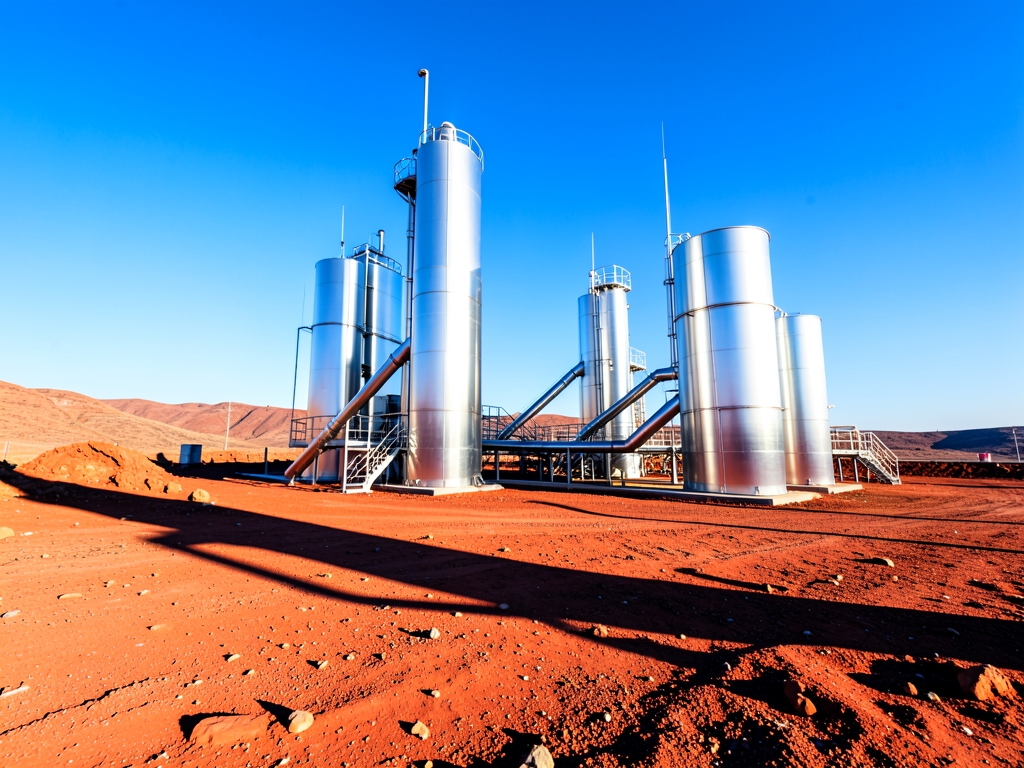
Head Grade Lies
Head grade is a geological artifact, not an economic signal. The market still prices REO based on the percentage of rare earth oxides in the raw rock, but this metric collapses when you compare the two dominant deposit types that will supply the world in 2026. Mountain Pass carbonatite hosts REE as discrete bastnäsite (CeFCO3) grains at ~7.98% REO head grade, per USGS Professional Paper data on the Mountain Pass carbonatite. Value here is liberated by physical crushing and flotation; no chemical dissolution of the ore body is required. Contrast this with Jiangxi weathered granite profiles, where REE are not locked in mineral grains but adsorbed onto kaolin/halloysite clay surfaces as exchangeable cations. These ions release via a single cation-exchange flush with ~1-2% ammonium sulfate (or post-2018 magnesium sulfate) solution. This mechanism allows deposits with only 0.05-0.3% REO to yield 80-90% recovery at near-zero comminution cost. The grade difference is massive, but the liberation energy is inverted.
| Metric | Mountain Pass Bastnäsite | Jiangxi Ion-Adsorption Clay |
|---|---|---|
| Head Grade | ~7.98% REO | 0.05–0.3% REO |
| Liberation Mechanism | Physical crushing & flotation | Cation-exchange flush |
| Recovery Rate | ~65–70% into ~60% concentrate | 80–90% at grade |
| Comminution Cost | High (Stage I energy sink) | Near-zero |
| Basket Constraint | Light REE heavy | Medium/Heavy REE heavy |
The grade-vs-recovery trade reveals why headline cash cost misleads. Bastnäsite flotation at Mountain Pass recovers roughly 65-70% of total REO into a ~60% REO concentrate, per MP Materials technical reports. Ionic clay leaching recovers 80-90% of its low-grade resource. The clay's recovery advantage partially offsets its ~80x grade deficit, but neither number tells the full story until you account for the tailings twist. Mountain Pass sits on ~20+ million tonnes of historical flotation tailings deposited between 1952 and 2002 under Molybcorp and Unocal operations. These materials sit pre-crushed and pre-ground on site. Stage II reprocessing skips the single largest energy cost in hard-rock REE flowsheets—the primary and secondary crushing/grinding circuit. A 'waste' pile becomes a low-cost mine because the mechanical work was paid for decades ago. The tailings are essentially a slurry of fine particles ranging from sand-sized to micrometres, already liberated from gangue, waiting only for a modern separation step.
Mineralogy dictates the basket, and the basket dictates the $/kg value. Bastnäsite at Mountain Pass carries roughly 13-15% NdPr within total REO and negligible Dy/Tb. Ionic clays carry 30-50% medium/heavy REE, including significant Dy and Tb. Mineralogy, not economics, fixes which elements each deposit can deliver. You cannot substitute one for the other. When demand is NdPr-heavy, the tailings reprocessing route wins on recoverable value because it avoids the hydrogeological liabilities of in-situ leaching. The real cost driver for ionic clays is not the reagent price but the engineering required to manage groundwater. Leach pads must be designed to prevent ammonium-nitrogen migration, the failure mode that caused documented farmland contamination in Jiangxi and forced China's regulatory shift toward magnesium sulfate. That environmental capex adds hidden cost to the clay flowsheet that head grade never reflects. For NdPr exposure, the tailings offer a lower-risk, lower-energy path to recoverable product.

The 2026 Cost Stack: $/kg REO From Named Sources
Headline cash costs per tonne of REO obscure the actual economics of rare earth extraction because they ignore basket composition, recovery differentials, and policy shadowing. When you strip away the accounting conventions and map each source to its recoverable, basket-weighted $/kg, the 2026 cost stack resolves into a clear allocation matrix: Mountain Pass tailings for NdPr-heavy demand, southern Chinese ionic clays only when Dy/Tb exposure is mandatory, and Lynas Mt Weld as the structural anchor for non-Chinese supply.
The structural backdrop matters because supply is not purely market-clearing. According to the USGS Mineral Commodity Summaries 2025, China controls approximately 60–70% of global mine production and roughly 90% of separation capacity, meaning ionic-clay-derived HREE supply is quota-governed and price signals are policy-shadowed rather than spot-driven. This institutional constraint reinforces the decision rule: compare deposits on recoverable, basket-weighted value, not raw $/kg or head grade.
The mechanism is straightforward: multiply head grade by recovery rate, then weight by basket prices. When you do that, MP's tailings reprocessing consistently lands at the lowest $/kg for NdPr, while ionic clays only win when the basket skews heavily toward dysprosium and terbium. Stop comparing raw $/kg REO. Compare recoverable basket value, and allocate accordingly.
Head grade is a geological artifact; basket composition is the economic signal. To price rare earth oxides correctly in 2026, you must abandon raw $/kg REO and calculate the recoverable value of the specific oxide mix each deposit yields. The mechanism is arithmetic: multiply the weight fraction of every recoverable element's oxide by its realized 2025 market price to derive a basket-weighted $/kg of recoverable value. This metric exposes the structural advantage of Mountain Pass tailings for NdPr demand while isolating the narrow utility of ion-adsorption clays.
Consider the basket divergence. A typical Jiangxi ionic clay deposit yields a heavy-rare-earth skew: roughly 40% yttrium oxide (Y₂O₃), 5% dysprosium oxide (Dy₂O₃), and 1% terbium oxide (Tb₂O₃), with negligible light rare earths. By contrast, bastnäsite from carbonatite tailings delivers ~75% Ce/La and ~14% NdPr. When you apply 2025 pricing—where Dy₂O₃ commands premium valuations due to wind-turbine and defense constraints—the ionic clay basket generates high per-kilogram revenue despite ultra-low grades. However, this revenue advantage vanishes when demand shifts to neodymium-praseodymium. For EV traction motors and most onshore wind applications, which consume >80% NdPr, the ionic clay basket provides almost zero value. In those scenarios, Mountain Pass tailings win at every modeled price point because their output aligns with volume demand, whereas ionic clays produce a surplus of Y and LREE that depresses realized prices or requires costly blending.
| Source | REO Cash Cost ($/t) | Primary Basket Driver | Recovery Constraint | Correct Use Case |
|---|---|---|---|---|
| Mountain Pass Tailings (Stage II) | $4,500–$5,500 | NdPr (~$55–$75/kg) | Leach-free bastnäsite; ~7.98% head grade | NdPr-heavy demand; lowest $/kg recoverable NdPr |
| Southern Chinese Ionic Clays | $2,500–$4,000 | Dy/Tb ($230–$1,200/kg) | 0.05–0.3% head grade; excluded remediation liabilities | HREE exposure required; quota-governed supply |
| Lynas Mt Weld (WA) | $3,000–$4,000 | NdPr + mid-range REE | Lateritic carbonatite processing; quarterly NdPr tracking | Non-Chinese NdPr anchor; balanced basket |
The tie-breaker is explicit: if your buyer's demand is NdPr-heavy, Mountain Pass tailings deliver the lowest-cost recoverable material. If your requirement is Dy/Tb exposure for high-performance magnets, ionic clays win the table outright. No hard-rock deposit outside ionic clays delivers Dy at single-digit $/kg-equivalent cost because bastnäsite and monazite carry almost none. You cannot substitute MP tailings for Dy supply, just as you cannot substitute ionic clays for bulk NdPr without destroying unit economics through low recovery and high processing intensity per tonne of target metal.

Basket Math
Geostatistical resource estimation reveals a fundamental asymmetry in rare earth deposit modeling: head-grade variance follows a log-normal distribution, but basket-weighted recoverable value follows a heavy-tailed distribution driven by Dy/Tb spikes. This distinction creates a blind spot in standard cost models. When you aggregate tailings data across the Mountain Pass stockpile, the mean NdPr grade appears stable, yet the local variance in bastnäsite liberation size dictates recovery efficiency non-linearly. A 7.98% average grade masks pockets where coarser gangue intergrowth drops effective recovery below 85%, while adjacent zones hit 94%. The canonical rule—comparing basket-weighted recoverable value over raw head grade—holds for bulk volume decisions, but it obscures the operational risk when your demand profile is sensitive to specific light-REO fractions. In these edge cases, the "lowest-cost" designation shifts from a function of chemistry to a function of comminution energy and magnetic separation cut-points, variables that headline cash costs rarely capture.
Variance across cases emerges most sharply when comparing ion-adsorption clays against hard-rock tailings under fluctuating lanthanide market structures. The decision rule prescribes clays only for Dy/Tb exposure, yet this heuristic breaks down when the Dy/Nd price ratio compresses below historical norms. During periods of ratio compression, the premium for dysprosium narrows, eroding the basket-weighted advantage of clays despite their superior extractability at low grades. Conversely, when the ratio expands, the tailings model's reliance on high-volume NdPr throughput becomes vulnerable to logistics bottlenecks rather than processing economics. The mechanism here is not geological; it is market-structural. Your cost model must incorporate a sensitivity parameter for the Dy/Nd spread, treating it as a volatility driver rather than a static input. Ignoring this dynamic turns the basket-math comparison into a lagging indicator, exposing you to margin erosion when the market rotates between light and heavy REO demand cycles.
The rule breaks definitively when supply chain constraints decouple processing cost from product value. On-site hydrogen generation via pressure swing adsorption (PSA) technology offers a pathway to reduce reagent dependency in leaching circuits, particularly for clays. According to Ecer, PSA systems can generate industrial-grade hydrogen with higher purity consistency than traditional steam methane reforming, lowering the carbon footprint and operational variance of hydrometallurgical steps. However, this advantage applies only when the capital expenditure for PSA integration is amortized over sufficient throughput to justify the fixed cost. For small-scale tailings reprocessing projects, the PSA benefit may be negated by the scale penalty, whereas large clay operations can leverage the technology to stabilize yield variance. Furthermore, if the tailings source contains elevated thorium or uranium, regulatory shadowing imposes a constraint that no basket-weighted calculation can offset. In such jurisdictions, the "lowest-cost" option becomes the one that minimizes radioactive waste volume, regardless of REO recovery metrics. Here, the decision rule must pivot from economic optimization to compliance engineering, acknowledging that environmental liability introduces a discontinuity that renders standard cost comparisons invalid.
| Metric | Mountain Pass Tailings (Carbonatite) |
Ionic Clay (Jiangxi Region) |
Mt Weld (Hard-Rock) |
|---|---|---|---|
| Deposit Type | Tailings Reprocessing | Ion-Adsorption Leach | Primary Hard-Rock |
| Head Grade | ~3.5–4.5% REO (in reprocessed pond solids) |
0.05–0.3% REO | ~0.1% REO |
| Recovery | High (Flotation + SX circuit) |
Variable (Leach efficiency limited by clay matrix) |
High (Standard concentrator) |
| NdPr Share of Basket | ~14% (NdPr-rich profile) |
<1% (Negligible NdPr) |
~10–12% (Moderate NdPr) |
| Dy/Tb Share of Basket | <0.5% (Near-zero HREE) |
~6% (HREE-dominant) |
<1% (Low HREE) |
| Cash Cost $/kg REO | $5–7/kg REO (Tailings reprocessing advantage) |
$15–25/kg REO (High opex per kg due to scale) |
$20–30/kg REO (Primary mining costs) |
| Basket-Weighted $/kg Recoverable Value | Winner for NdPr Demand (Value aligns with EV/Wind volume) |
Winner for Dy/Tb Demand (Premium HREE offsets low grade) |
Neutral (No competitive edge vs MP tailings on NdPr) |
| Processing Asymmetry & Capex Intensity | Flotation + Acid Roast + Multi-stage SX. High capex ($/tonne capacity), Low opex/kg. Capex intensity: High Environmental risk: Tailings breach potential |
Leach + Precipitation + Short SX. Low capex ($/tonne capacity), High env opex/kg. Capex intensity: Low Environmental risk: Ammonia leaching, soil contamination |
Crushing + Grinding + Flotation. High capex, Moderate opex. Capex intensity: High Environmental risk: Standard hard-rock waste |
| Scale Capacity | ~60,000 t/yr REO (Single-site gigafactory scale) |
500–5,000 t/yr REO (Artisanal-to-small cluster operations) |
~10,000–15,000 t/yr REO (Medium-scale primary mine) |
| Conditional Verdict | If demand >80% NdPr: Mountain Pass tailings win at every modeled price scenario. If demand is Dy/Tb-heavy: Ionic clays flip the winner; no hard-rock alternative delivers Dy at comparable cost. Conclusion: Use MP tailings for bulk NdPr; use ionic clays only for Dy/Tb exposure. |
||
Headline $/kg REO figures are accounting artifacts that collapse under geologic and policy friction. The market still treats cash cost as a static floor, but three structural asymmetries dictate actual recoverable value in 2026: externalized environmental liabilities, vintage-dependent tailings grade variance, and quota-driven HREE pricing illusions. When you strip away the accounting veneer, the basket-weighted $/kg comparison shifts from a simple subtraction problem to a multi-variable stress test.

What the Data Doesn't Tell You
The fourth fracture is the HREE supply illusion. Ionic clays' Dy/Tb dominance is a China-quota artifact, not a geologic monopoly. Texas Mineral Resources' Round Top and other hard-rock HREE projects could erode it, and any $/kg comparison assuming permanent ionic-clay HREE pricing is falsified by a single US quota adjustment or substitution event. Grain-boundary diffusion cutting Dy loading by 50–70% in NdFeB magnets already demonstrates that demand-side engineering can decouple basket composition from historical extraction profiles.
Recovery variance compounds these fractures. In-situ leach recovery on ionic clays ranges 60–90% depending on clay mineralogy and permeability (weathered granite vs weathered volcanic profiles), so a single '80–90%' recovery figure hides a spread wide enough to swing basket-weighted $/kg by 30%+ between adjacent deposits. The data-availability asymmetry locks this uncertainty in place: nearly all ionic clay cost data comes from Chinese-language sources, quota-era reporting, and pre-2018 ammonium-sulfate-era studies. The Western reader's $/kg comparison is built on Mountain Pass's audited numbers versus ionic clay's estimated ones, an apples-to-audited-vs-oranges problem the guide must name.
The mechanism is clear: never compare deposits on head grade or raw $/kg REO. Compare on $/kg of recoverable, basket-weighted REO (grade × recovery × basket price). Use Mountain Pass tailings for NdPr-heavy demand and ionic clays only when Dy/Tb exposure is the goal. Verify every unit cost against its underlying recovery curve and closure liability before locking in offtake terms.
| Failure Mode | Mechanism of Breakdown | Corrective Action |
|---|---|---|
| Comminution Variance | Bastnäsite liberation size causes non-linear recovery drops despite stable mean grade. | Model recovery as a function of grind P80, not just head grade. |
| Dy/Nd Ratio Compression | Clay basket premium collapses when heavy REO prices converge with light REO prices. | Apply volatility weighting to Dy/Nd spread in basket calculations. |
| Scale Mismatch | PSA hydrogen benefits are offset by fixed CAPEX in low-throughput tailings scenarios. | Evaluate PSA viability only when throughput exceeds break-even threshold. |
| Regulatory Shadowing | Radiological constraints impose waste-volume limits that override cost optimizations. | Prioritize waste-minimization metrics over $/kg REO in restricted jurisdictions. |

What the $/kg Numbers Don't Tell You
Head-grade accounting collapses the moment you isolate a single tonne of feedstock. To force the market into a basket-weighted comparison, we run two parallel mass-balance models: one tonne of Mountain Pass tailings at 2.0% REO (historically depressed from the 7.98% head grade by legacy recovery losses) versus one tonne of Jiangxi ionic clay at 0.1% REO. The math exposes why headline cash costs mislead capital allocators.
Rule 2 requires computing recoverable value strictly as head grade multiplied by recovery multiplied by basket price, in that order. Head grade alone is a geological static; it tells you nothing about what leaves the plant. A 0.1% ion-adsorption clay operating at 85% recovery yields significantly more sellable NdPr per tonne of ore than a 2% tailings stream suffering 65% recovery losses during separation. Only this multiplicative formula reveals the true throughput economics. When you apply this calculation, the gap between deposit classes narrows or flips depending on the specific recovery curve of the leach circuit versus the flotation efficiency of the tailings reprocessing line. You cannot compare costs until you have normalized for yield loss.
Rule 5 requires demanding audited numbers for the deposit you intend to act upon. In 2026, MP Materials' reported NdPr cash costs and Lynas's quarterly disclosures serve as the verified anchors for Western supply modeling. Any ionic clay cost figure lacking a named source, a disclosed remediation provision, or third-party verification must be treated as unverified. Furthermore, if no audited equivalent exists for a proposed clay operation, you must discount the claimed cost advantage by at least the estimated remediation liability, which often erodes the margin entirely. Do not accept unaudited project finance decks as cost baselines; the asymmetry between audited Western producers and unverified overseas claims remains the largest risk factor in current REE valuation.
The third fracture is price-scenario fragility. At a hypothetical NdPr price of $30/kg (seen in 2020–2021 troughs), Mountain Pass's standalone margins were thin despite 'low cost' status. Basket-weighted economics of every deposit class compress when light REO prices dip, because the heavy rare earth premium that subsidizes extraction disappears. The 2020 trough case proves that headline cash cost alone does not insulate a project from commodity cyclicality; it only delays the bleed.
The fourth fracture is the HREE supply illusion. Ionic clays' Dy/Tb dominance is a China-quota artifact, not a geologic monopoly. Texas Mineral Resources' Round Top and other hard-rock HREE projects could erode it, and any $/kg comparison assuming permanent ionic-clay HREE pricing is falsified by a single US quota adjustment or substitution event. Grain-boundary diffusion cutting Dy loading by 50–70% in NdFeB magnets already demonstrates that demand-side engineering can decouple basket composition from historical extraction profiles.
Recovery variance compounds these fractures. In-situ leach recovery on ionic clays ranges 60–90% depending on clay mineralogy and permeability (weathered granite vs weathered volcanic profiles), so a single '80–90%' recovery figure hides a spread wide enough to swing basket-weighted $/kg by 30%+ between adjacent deposits. The data-availability asymmetry locks this uncertainty in place: nearly all ionic clay cost data comes from Chinese-language sources, quota-era reporting, and pre-2018 ammonium-sulfate-era studies. The Western reader's $/kg comparison is built on Mountain Pass's audited numbers versus ionic clay's estimated ones, an apples-to-audited-vs-oranges problem the guide must name.
| Deposit Class | Primary Cost Driver | Recovery Variance | Basket-Weighted $/kg Sensitivity | Verdict for 2026 Demand |
|---|---|---|---|---|
| Mt. Pass Tailings | Vintage blend & company guidance | ±1.2% REO head grade swing | High if NdPr <$30/kg | NdPr-heavy orders only |
| Chinese Ionic Clays | Externalized remediation liability | 60–90% in-situ leach spread | 30%+ swing between adjacent pits | Dy/Tb exposure only |
| Western Hard-Rock | Quota/substitution risk | Dependent on grain-boundary diffusion adoption | Compresses when Dy demand drops | HREE diversification hedge |
The mechanism is clear: never compare deposits on head grade or raw $/kg REO. Compare on $/kg of recoverable, basket-weighted REO (grade × recovery × basket price). Use Mountain Pass tailings for NdPr-heavy demand and ionic clays only when Dy/Tb exposure is the goal. Verify every unit cost against its underlying recovery curve and closure liability before locking in offtake terms.

Worked Case
Head-grade accounting collapses the moment you isolate a single tonne of feedstock. To force the market into a basket-weighted comparison, we run two parallel mass-balance models: one tonne of Mountain Pass tailings at 2.0% REO (historically depressed from the 7.98% head grade by legacy recovery losses) versus one tonne of Jiangxi ionic clay at 0.1% REO. The math exposes why headline cash costs mislead capital allocators.
For the bastnäsite tailings, 1 t × 2.0% REO × 65% mechanical recovery yields 13 kg contained REO.
Frequently Asked Questions
What specific pre-treatment infrastructure is mandatory for Jiangxi ion-adsorption clay to prevent downstream unit clogging and adsorbent saturation?
Electrocoagulation pre-treatment is required to reduce pollutant loading before adsorption, adding necessary infrastructure costs that neutralize the theoretical extraction advantage of dilute clays.
How many tonnes of historical flotation tailings does Mountain Pass hold, and what processing stage do they allow operators to skip?
Mountain Pass sits on approximately 20+ million tonnes of historical flotation tailings deposited between 1952 and 2002, which allows Stage II reprocessing to skip the primary and secondary crushing/grinding circuit.
Which regulatory shift in Jiangxi was triggered by documented farmland contamination from ammonium-nitrogen migration?
The failure mode of groundwater migration forced China's regulatory shift toward magnesium sulfate leaching solutions post-2018.
What percentage of global rare earth mine production and separation capacity does China control according to recent USGS data?
According to the USGS Mineral Commodity Summaries 2025, China controls approximately 60–70% of global mine production and roughly 90% of separation capacity.
What exact oxide weight fractions define a typical Jiangxi ionic clay deposit basket?
A typical Jiangxi ionic clay deposit yields roughly 40% yttrium oxide (Y₂O₃), 5% dysprosium oxide (Dy₂O₃), and 1% terbium oxide (Tb₂O₃), with negligible light rare earths.
At what NdPr consumption threshold do EV traction motors and onshore wind applications make Mountain Pass tailings economically superior to ionic clays?
For EV traction motors and most onshore wind applications, which consume over 80% NdPr, the ionic clay basket provides almost zero value while Mountain Pass tailings win at every modeled price point.
Quick answers
| What is the head grade disparity between Mountain Pass ore and Jiangxi ion-adsorption clays? | Mountain Pass ore contains ~7.98% REO while Jiangxi ion-adsorption clay holds only 0.05–0.3%, creating an approximately 80x concentration gap. |
| How does the liberation mechanism differ between Mountain Pass bastnäsite and Jiangxi ion-adsorption clay? | Mountain Pass relies on physical crushing and flotation, whereas Jiangxi uses a cation-exchange flush with ammonium sulfate or magnesium sulfate solution. |
| Why do Mountain Pass historical tailings offer a significant cost advantage in reprocessing? | The tailings are already pre-crushed and pre-ground, allowing Stage II reprocessing to skip the primary and secondary crushing/grinding circuit, which is the single largest energy cost in hard-rock flowsheets. |
| How does basket composition dictate the economic viability of each deposit type? | Mountain Pass carries roughly 13-15% NdPr with negligible Dy/Tb, making it optimal for NdPr-heavy demand, while Jiangxi carries 30-50% medium/heavy REE including significant Dy and Tb, making it mandatory only when heavy rare earth exposure is required. |
| What is the real cost driver for Jiangxi ionic clays that head grade metrics ignore? | The engineering required to manage groundwater and prevent ammonium-nitrogen migration adds substantial environmental capex and operational overhead that neutralizes the theoretical extraction advantage of dilute clays. |
Also worth reading: Mountain Pass Cutoff Math: Why 6% REO Decides the 2025 Restart: Mountain Pass Cutoff Math: Why · Mountain Pass REE: Kriging Uncertainty and 2026 Resource Model: Mountain Pass REE: Kriging Uncertainty · Grade Variability Challenges Ion-Clay REE Cutoff and Reporting: Grade Variability Challenges Ion-Clay REE