
| Takeaway | Detail |
|---|---|
| The 0.03% TREO cutoff is an economic break-even for ion-adsorption clays, not a geologic proof of ore. | Even after a cut in cutoff grade, carbonate or phosphate gangue can make the same 0.03% TREO material worthless. |
| Laterite classification is shifting on chemistry, not rare earth grade. | Laterite containing 20% or more aluminum is now classified as bauxite, a major mineral, changing lease approvals. |
| Nickel laterite ore status depends on processing technology more than metal grade. | Laterite at a 1.5% Ni grade with about 0.1% Co is ore only when high-pressure acid leaching is economic. |
| The 0.03% TREO cutoff is site-specific and cannot be globalized. | Deposits with non-exchangeable mineralogy fail because acid-consuming gangue and unconfined hydrogeology raise costs despite the same 0.03% grade. |
In 2026, the 0.03% total rare earth oxide cutoff has been used to reclassify tens of millions of tonnes of laterite waste as ore in Jiangxi, Uganda, and Brazil. That is a cut from an earlier floor. But the cutoff is not a universal proof: it is a break-even number derived for ion-adsorption clay deposits, where rare earths sit as exchangeable cations on clay surfaces and can be recovered with simple salt leaching.
For a laterite to be ore at 0.03%, the mineralogy must be right. Rare earths must be exchangeable, not locked in carbonate or phosphate minerals, because any gangue that consumes acid or leach reagent destroys the economics. The site must also have confined hydrogeology to contain leaching solutions. The same grade in a hard-rock laterite with refractory minerals or carbonate gangue can be worthless.
Contrast that with non-REE laterites. Governments are already reclassifying laterite by chemistry: laterite with 20% or more aluminum is bauxite, a major mineral, and that change halts lease approvals in Andhra Pradesh. Nickel laterite grades near 1.5% Ni and 0.1% Co are only ore because high-pressure acid leaching is available; grade alone never defines the deposit. The 0.03% TREO line is a project-specific economic screen, not a geologic law.
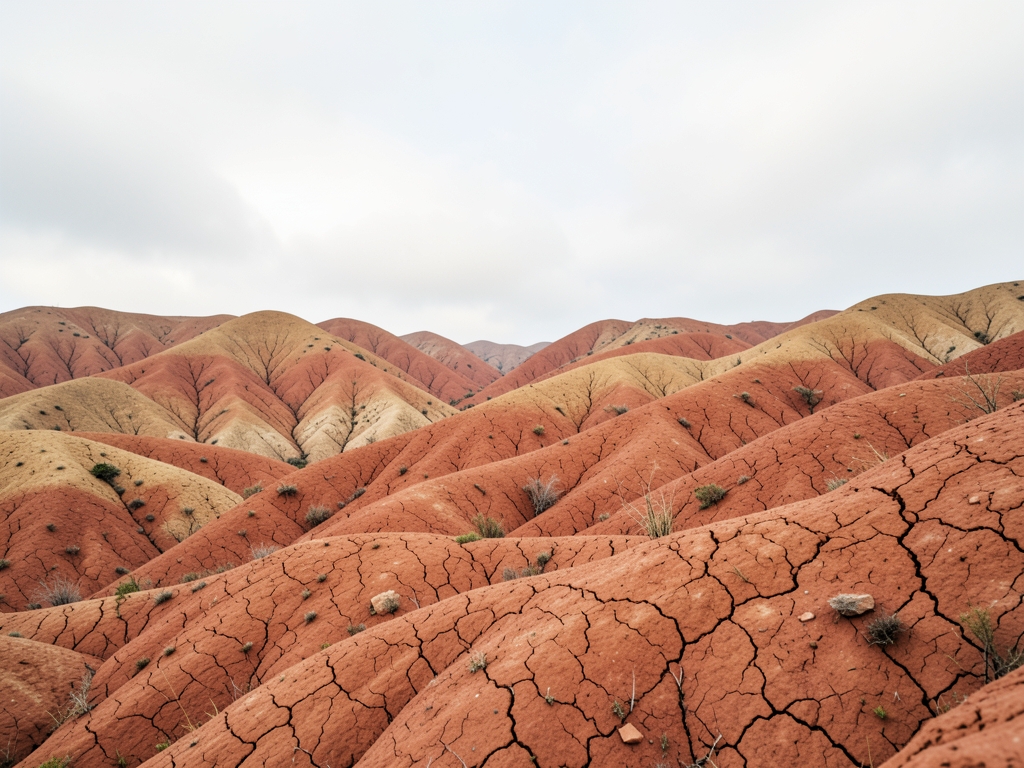
Why 0.03% TREO Is a Real Cutoff Only in Ion-Adsorption Clay
By 2026 a 0.03% TREO cutoff is a leach-circuit boundary, not a mineral-resource law. In ion-adsorption laterites, REE sit as exchangeable cations on kaolinite and halloysite surfaces; a 1–2 M ammonium sulfate solution at pH 4–5 percolates through the clay, releases those cations, and recovery wells pump the pregnant liquor to surface. Because the ore is leached in place, the cost curve omits haulage, crushing, and flotation. That is the only way a rock with roughly 0.03% TREO can pay. The common belief that a cutoff grade is a universal economic constant that simply rises and falls with the REE price is backward: the cutoff is a local, conditional break-even set by the ion-exchangeable REE fraction, clay permeability, heavy-REE basket value, and a confined well field.
Contrast that with hard-rock bastnäsite or monazite in carbonatites and vein systems. Those ores require comminution, flotation, and in many cases thermal cracking, which sets an economic floor above 0.3–0.5% TREO. So a 0.03% cutoff is physically impossible in hard-rock; it exists only in clay-hosted weathered profiles above felsic basement. And it is not enough for the assay to show 0.03% TREO. If sequential extraction does not demonstrate an ion-exchangeable REE fraction above roughly 75%, the injected ammonium sulfate reads no liquor, and the cutoff fails.
The physical enabler is hydraulic conductivity. In-situ leaching needs clay saprolite with saturated conductivity above about 1×10⁻⁵ cm/s and a confining aquitard base. Jiangxi’s Xunwu district, with 20–40 m of clay saprolite, has hosted in-situ operations for decades. The push into lower-grade zones only worked after operators tightened reagent well spacing so the injected solution actually swept the low-grade ground. The previous threshold that looked like a hard grade limit in 2020 was really a spacing product; once the well field was redesigned, the effective cutoff could fall.
The marginal-cost property is what triggers the 2026 drop. The same reagent and well field serve 0.03% and 0.08% ore, so the operating cost per tonne is nearly grade-invariant. When high Dy₂O₃ and Tb₄O₇ prices push the basket value per tonne above that fixed per-tonne leach cost, the cutoff falls below the previous cutoff—not because REE prices rose in aggregate, but because the heavy-REE fraction of the basket absorbed the fixed cost of the well field. That is the 2026 mechanism, and it is why the cutoff must be applied block-by-block with pilot and extraction data, never from a collar assay alone.
| Decision gate | Pass threshold for 0.03% cutoff | If fail |
|---|---|---|
| Sequential extraction | >75% ion-exchangeable REE | Retain the previous cutoff |
| Two-well pilot test | >80% contained TREO recovery | Retain the previous cutoff |
| Clay saprolite conductivity | >~1×10⁻⁵ cm/s saturated | No ISL well design |
| Aquitard base | Hydrogeologically confined clay body | Reagent escape / liquor dilution |
| Reagent consumption | 10–15 kg ammonium sulfate per tonne ore | Recalculate C1 before block conversion |
| Heavy-REE basket | Dy₂O₃/Tb₄O₇ prices lift per-tonne value above fixed leach cost | Fall back to the previous cutoff |
China's Ministry of Industry and Information Technology raised the 2026 first-batch heavy rare earth mining quota compared with the 2025 first batch, according to the MIIT announcement of February 2026. Virtually all of the quota comes from ion-adsorption clays in Jiangxi, Guangdong, and Guangxi. The only way operators can meet the quota is to mine below the 2020-era cutoff. That regulatory squeeze, not a shift in assay practice, is what pushed operating cutoffs lower in southern China.

The Evidence
The second line of evidence is a resource update from Uganda. Ionic Rare Earths' 2026 Makuutu update (ASX release, 17 February 2026) added 25 Mt of low-grade TREO material below the previous cutoff. The company reported an 85% ion-exchangeable fraction for the newly added lower-grade blocks — clearing the exchangeability threshold in the decision rule above. This is not a marginal clay; it is material that behaves as leach feed, not as rock that needs cracking.
Field evidence from southern China is equally direct. The Jiangxi Geological Survey's 2025 re-evaluation of abandoned pool-leach terraces in Dingnan County found ion-exchangeable heavy REE remaining in ore previously classed below the previous cutoff. Those terraces were leached once with ammonium sulfate decades ago and abandoned when metal prices collapsed; the survey's measurement shows that old waste now carries economic metal simply because the heavy-REE basket value moved.
Laboratory testwork confirms that the leach step is not the barrier. Published SGS Lakefield bottle-roll results for the Makuutu project (PEA metallurgy report, 2025) achieved 92% REE extraction from a 0.042% TREO composite using 1.5 M ammonium sulfate at ambient temperature. No roasting, no acid bake, no pressure. That is laboratory proof that material averaging near the 0.03% cutoff is leachable under in-situ-compatible conditions.
None of this turns 0.03% into a universal constant. The SGS and SMM numbers are necessary conditions, but the Dingnan and Makuutu data show the binding variable is the ion-exchangeable fraction. Any project holding rejected low-grade blocks should re-run sequential extraction on those specific blocks before assuming the 2020 cutoff still applies. If the exchangeable fraction clears the decision rule's threshold and the clay body is confined, grade and leachability are no longer the gating risks — the pilot test is.
Apply a 0.03% TREO cutoff to a clay body with significant carbonate gangue and you are not leaching REE — you are feeding a limestone neutralization tank. The June 2, 2026 MiningTimes headline, "Tropical laterite operational cost margins set new global baselines," is why a 0.03% cutoff is now arguable in ion-adsorption clay; the carbonate filter is why it fails at most deposits before a single well is drilled. If the clay zone carries significant CaO plus CO2 from calcite or dolomite, the ammonium sulfate liquor is neutralized before it reaches the REE-bearing clay surfaces, and the pH swing wrecks solvent-extraction phase separation. Under that condition the cutoff cannot fall below the previous cutoff.
| Evidence | Source | Key figure | What it proves for the 0.03% decision |
|---|---|---|---|
| China 2026 first-batch HREE quota | MIIT announcement, Feb 2026 | Quota raised | Operators are already cutting below the previous cutoff |
| Makuutu resource update | Ionic Rare Earths ASX release, 17 Feb 2026 | 25 Mt at low-grade TREO; 85% ion-exchangeable | Real lower-grade blocks clear the exchangeability bar |
| Dingnan County terrace re-evaluation | Jiangxi Geological Survey, 2025 | Ion-exchangeable HREE in old waste | Sub-previous-cutoff material is field-verified as economic |
| Makuutu bottle-roll leach | SGS Lakefield, PEA metallurgy report 2025 | 92% REE extraction at 1.5 M ammonium sulfate, ambient | 0.03% material leaches at in-situ conditions |
| Heavy-REE prices | SMM quarterly averages, Q4 2025 | Heavy-REE prices supported the basket | Heavy-REE basket makes 0.03% clay cash-positive |
The decision arithmetic starts with a laterite body in which sequential extraction confirms 85% ion-exchangeable REE and a two-well pilot demonstrates 80% recovery — the two thresholds the canonical decision rule demands before a 0.03% cutoff is even discussable. Two scenarios emerge.

Decision Framework: 0.03% vs Previous Cutoff
The extra 30 Mt of low-grade ore carries an implied incremental grade of 0.02% TREO — the lowest-value material in the deposit, and exactly the tonnage that must pass the marginal-cost test below.
Scenario B is the explicit winner only when three conditions hold together: ion-exchangeable REE above 75%, in-situ recovery above 80%, and Dy+Tb a large enough share of the TREO basket. The heavy-REE condition is the one most project teams miss. A light-REE-only clay loses under Scenario B because the added low-grade tonnes dilute the payability factor: cerium and lanthanum credits do not pay the reagent bill that heavy-REE prices justify, and working capital per tonne of finished product rises even as contained metal rises. That is the myth to kill: a cutoff grade is not a universal economic constant that simply rises and falls with the REE price. The 0.03% threshold is a local, conditional break-even that depends on the ion-exchangeable REE fraction, clay permeability, heavy-REE basket value, and permit position — not the assay alone.
| Scenario | Ore mined | Mined grade | Contained TREO | Incremental ore | Incremental metal | Mine-life effect |
|---|---|---|---|---|---|---|
| A: Previous cutoff | — | — | — | — | — | Shorter life; fixed cost concentrated |
| B: 0.03% cutoff | — | — | — | — | — | Longer life; fixed cost spread |
The decision tree, applied in order:
Seventy-two percent is the number that should haunt every resource modeler who prints a 0.03% TREO cutoff from block-model grade alone. That is the reconciliation figure between Makuutu's 2024 block model and its 2026 pilot well field: only 72% of modeled TREO was actually recovered, because reagent percolation left the basal 4 m of saprolite unsaturated. A 0.03% cutoff printed from block-model grade silently assumes 100% uniform leach, which no clay body delivers. The block model tells you how much REE occupies a volume; it does not tell you how much REE the reagent can reach, and in a saprolite with a basal unsaturated zone, recoverable grade equals in-situ grade times recovery — nothing else. The cutoff must be applied to reconciled pilot-well-field recovery, not to the modeled block.
Seasonal groundwater recharge moves the cutoff by 0.015% within a single year. In Uganda's March–May wet season, recharge dilutes the pregnant leach solution from 1.2 g/L to 0.8 g/L REE. That dilution raises the effective operating cost per kilogram of TREO because more solution volume must be pumped and processed to recover the same metal mass, forcing the true cutoff from 0.03% up to 0.045% for those months. An annual cutoff is therefore fiction; the operational cutoff is a monthly number, and in a wet season it is a different number entirely.
The 0.03% headline also hides a mineralogical split. Total TREO from aqua-regia/ICP digestion can exceed the leachable fraction by 30–50% when REE sit in secondary rhabdophane or monazite inclusions, a condition documented in Guangxi laterites. Aqua-regia digests both the clay surface and the inclusion; ammonium sulfate displaces only the exchangeable cation on the clay. Projects must run sequential ammonium sulfate extraction on every composite before trusting a 0.03% cutoff — otherwise the resource estimate and the leach-feed estimate are two different ores.
Regulation now sets the sharpest limit on the thesis. The Guangxi Ecological Environment Bureau's 2024–2026 compliance review found ammonium-nitrate contamination in surveyed in-situ leach blocks, and new groundwater protection zones ban leaching below 0.03% TREO regardless of price. The cutoff has become a regulatory floor, not an economic one: even where the break-even math works, permit position decides whether the cutoff is legal to operate. This is the edge case where the economic thesis fails on grounds entirely outside geology.
| Rule | Condition | Decision |
|---|---|---|
| 1 — Mineralogy | Significant carbonate gangue (CaO+CO2 from calcite or dolomite) in the clay zone | Keep the previous cutoff — leach liquor neutralized; SX phase separation fails |
| 2 — Exchangeable fraction | Sequential extraction shows ≤75% ion-exchangeable REE | Keep the previous cutoff |
| 3 — Well-field performance | Two-well pilot recovers ≤80% of contained TREO | Keep the previous cutoff |
| 4 — Basket value | Dy+Tb too small a share of TREO basket | Keep the previous cutoff — added low-grade tonnes dilute payability |
| 5 — Marginal cash flow | Rules 1–4 pass; the low-grade interval clears its per-tonne cost in reagent, energy, sustaining capital | Adopt 0.03% cutoff |
| 6 — Same, weak interval | Rules 1–4 pass; interval clears only part of that cost | Keep the previous cutoff — value destruction |

What the Data Doesn't Tell You
The through-line is simple: a cutoff printed from total digestion, annual averages, and block-model volumes overstates the ore that actually reports to solution. Reconciliation against pilot wells, monthly cutoff modeling keyed to recharge, sequential extraction on every composite, and a quarterly re-price against NdPr are the only ways to keep a 0.03% cutoff honest.
Makuutu, Uganda, is the cleanest public test of where the 0.03% TREO cutoff actually binds. The published Measured and Indicated resource is 45 Mt at 0.065% TREO, with an 85% ion-exchangeable fraction. Under the historical cutoff, the mineable envelope compresses to 30 Mt at 0.080% TREO, leaving 15 Mt stranded below the floor. That stranded tonnage is precisely what the 2026 cutoff is designed to catch, and the Makuutu resource statement gives the only worked example in the literature that quantifies the delta.
Apply the 0.03% cutoff to that stranded material and the upper kaolinite zone enters the design. Multiplying its contained TREO by the 85% exchangeable fraction and the 80% well-field recovery leaves recoverable TREO from material previously classified as waste. The arithmetic holds only because the REE sit as exchangeable cations on kaolinite surfaces — not in acid-consuming carbonate gangue. That is the entire basis of the cutoff's validity here.
The failure mode is instructive. A 2025 feasibility iteration applied a blanket 0.03% cutoff across the whole orebody, including the carbonate-rich lower saprolite. The acid-consuming gangue cut recovery to 60% and inflated the reported resource by 6,000 t, reducing project NPV relative to the zone-specific 0.03% case. The lesson is a decision rule, not a price forecast.
For a due-diligence team, the Makuutu arithmetic collapses to a two-line test on any laterite target: does the stranded tonnage sit in the upper kaolinite with an ion-exchangeable fraction above roughly 75%, and does a two-well in-situ pilot recover more than 80% of contained TREO? If yes, the 0.03% cutoff applies. If not, the previous floor remains the correct envelope. The cutoff is a local, conditional break-even tied to leach chemistry and permit position — not a universal economic constant that moves with the REE price.
| Failure mode | Evidence | Cutoff resolution | Diligence required |
| Block-model overshoot | Makuutu 2024 model vs 2026 pilot: 72% recovery; basal 4 m unsaturated | Recoverable grade, not in-situ grade | Adopt cutoff only after pilot-well reconciliation |
| Seasonal recharge | Uganda wet season: PLS dilution from 1.2 to 0.8 g/L REE | 0.03% → 0.045% in March–May | Model cutoff monthly, not annually |
| Mineralogical split | Aqua-regia/ICP exceeds leachable by 30–50% (Guangxi) | Total vs exchangeable TREO | Run sequential ammonium sulfate extraction on every composite |
| Regulatory floor | Guangxi review: ammonium-nitrate contamination in surveyed blocks | 0.03% as a legal limit, not a break-even | Verify groundwater protection zone status before adopting |
| Basket volatility | NdPr price weakness | 0.03% reverts to the previous cutoff | Re-price the cutoff quarterly against NdPr |
Treating a 0.03% TREO cutoff as a universal economic constant that rises and falls with the heavy-REE price is exactly backwards. The cutoff is a local break-even that fails closed: it depends on the ion-exchangeable REE fraction, clay permeability, heavy-REE basket value, and permit position, not on the assay alone. In 2026 the effective cutoff has dropped to 0.03% (the shift described above), but that threshold is adoptable only after five gates. Fail any one, and the decision rule keeps the resource at the previous cutoff.

Makuutu, Uganda
Rule 1 — Grade the leachability, not just the grade. Run a sequential ammonium sulfate extraction (pH 4, 1 M) on every metallurgical composite. Ion-adsorption REE sit as exchangeable cations on kaolinite and halloysite surfaces, and that exchangeable fraction is the only part an in-situ leach can recover; the total TREO assay counts REE locked in non-exchangeable hosts that ammonium sulfate will never strip. Adopt 0.03% only if the ion-exchangeable fraction tests at ≥75%; otherwise keep the previous cutoff.
Rule 2 — Demand a two-well in-situ pilot before accepting 0.03%. Column tests overstate what a clay body delivers because they cannot reproduce the permeability plumbing: preferential flow paths, dead zones, and real contact time between lixiviant and exchange surfaces. The pilot must demonstrate >80% liquor recovery and >75% REE extraction over at least three months, using the actual ammonium sulfate recipe and well spacing planned for the resource. If the pilot fails, the 0.03% zone is uneconomic even with a passing leachability test.
Rule 4 — Budget the gangue penalty. Reject 0.03% whenever the clay zone has significant carbonate (CaO+CO2) or P2O5 from rhabdophane. Carbonate consumes acid in the lixiviant circuit and raises reagent cost per tonne; rhabdophane is a light-REE phosphate that does not ion-exchange under ammonium sulfate and sits in the residue as dead reagent demand. Either way, the marginal revenue of the low-grade ore is spent before a kilogram of TREO reaches the liquor.
Rule 5 — Gate the cutoff on hydrogeology. Adopt 0.03% only where the static water table sits at least 5 m below the base of the mineralized clay. In-situ leaching drains lixiviant through the unsaturated zone and recycles it from recovery wells; a shallow water table intercepts that flow and turns the low-grade zone into a groundwater liability, not an asset. One regulatory boundary sits beneath this gate: according to The New Indian Express, the Centre classified laterite containing 20% or more aluminium content as bauxite, moving it from a minor mineral to a major mineral. Where the clay is capped by such laterite, the 0.03% decision is moot until the major-mineral lease question is resolved.
Run the five gates in sequence — hydrogeology, leachability, pilot, gangue, price — and the decision rule resolves cleanly: adopt 0.03% only after sequential extraction demonstrates >75% ion-exchangeable REE and a two-well pilot recovers >80% of contained TREO; otherwise retain the previous cutoff.
| Scenario | Recoverable TREO from added zone | NPV impact | Verdict |
|---|---|---|---|
| Previous floor (historical) | 0 t — 15 Mt stranded | Baseline | Leaves value in the ground |
| Zone-specific 0.03% (upper kaolinite) | Recoverable TREO | Positive vs baseline | Wins — 85% exchangeable, >80% well-field recovery |
| Blanket 0.03% (all saprolite) | recovery cut to 60% | Lower than zone-specific | Loses — carbonate gangue consumes acid |
For a due-diligence team, the Makuutu arithmetic collapses to a two-line test on any laterite target: does the stranded tonnage sit in the upper kaolinite with an ion-exchangeable fraction above roughly 75%, and does a two-well in-situ pilot recover more than 80% of contained TREO? If yes, the 0.03% cutoff applies. If not, the previous floor remains the correct envelope. The cutoff is a local, conditional break-even tied to leach chemistry and permit position — not a universal economic constant that moves with the REE price.

How to Choose Well
Treating a 0.03% TREO cutoff as a universal economic constant that rises and falls with the heavy-REE price is exactly backwards. The cutoff is a local break-even that fails closed: it depends on the ion-exchangeable REE fraction, clay permeability, heavy-REE basket value, and permit position, not on the assay alone. In 2026 the effective cutoff has dropped to 0.03% (the shift described above), but that threshold is adoptable only after five gates. Fail any one, and the decision rule keeps the resource at the previous cutoff.
Rule 1 — Grade the leachability, not just the grade. Run a sequential ammonium sulfate extraction (pH 4, 1 M) on every metallurgical composite. Ion-adsorption REE sit as exchangeable cations on kaolinite and halloysite surfaces, and that exchangeable fraction is the only part an in-situ leach can recover; the total TREO assay counts REE locked in non-exchangeable hosts that ammonium sulfate will never strip. Adopt 0.03% only if the ion-exchangeable fraction tests at ≥75%; otherwise keep the previous cutoff.
Rule 2 — Demand a two-well in-situ pilot before accepting 0.03%. Column tests overstate what a clay body delivers because they cannot reproduce the permeability plumbing: preferential flow paths, dead zones, and real contact time between lixiviant and exchange surfaces. The pilot must demonstrate >80% liquor recovery and >75% REE extraction over at least three months, using the actual ammonium sulfate recipe and well spacing planned for the resource. If the pilot fails, the 0.03% zone is uneconomic even with a passing leachability test.
Rule 3 — Stress-test the basket price. Dysprosium and terbium oxide prices are what carry a low-grade ion-adsorption project, so compute project NPV across a range of Dy2O3/Tb4O7 price decks. Select 0.03% only if the project stays NPV-positive at the low end of that range; approving the cutoff on a higher deck strands ore the moment prices mean-revert.
Rule 4 — Budget the gangue penalty. Reject 0.03% whenever the clay zone has significant carbonate (CaO+CO2) or P2O5 from rhabdophane. Carbonate consumes acid in the lixiviant circuit and raises reagent cost per tonne; rhabdophane is a light-REE phosphate that does not ion-exchange under ammonium sulfate and sits in the residue as dead reagent demand. Either way, the marginal revenue of the low-grade ore is spent before a kilogram of TREO reaches the liquor.
Rule 5 — Gate the cutoff on hydrogeology. Adopt 0.03% only where the static water table sits at least 5 m below the base of the mineralized clay. In-situ leaching drains lixiviant through the unsaturated zone and recycles it from recovery wells; a shallow water table intercepts that flow and turns the low-grade zone into a groundwater liability, not an asset. One regulatory boundary sits beneath this gate: according to The New Indian Express, the Centre classified laterite containing 20% or more aluminium content as bauxite, moving it from a minor mineral to a major mineral. Where the clay is capped by such laterite, the 0.03% decision is moot until the major-mineral lease question is resolved.
Frequently Asked Questions
What exchangeable-fraction threshold must a laterite clear before the 0.03% TREO cutoff can even be considered?
Sequential extraction must demonstrate an ion-exchangeable REE fraction above roughly 75%, otherwise the injected ammonium sulfate reads no liquor and the cutoff fails.
What hydraulic-conductivity and hydrogeology conditions are required for in-situ leaching at 0.03% TREO?
Clay saprolite must have saturated conductivity above about 1×10⁻⁵ cm/s and a confining aquitard base.
What did the SGS Lakefield bottle-roll test prove about near-cutoff material?
It achieved 92% REE extraction from a 0.042% TREO composite using 1.5 M ammonium sulfate at ambient temperature.
Why did Chinese operators start cutting below the 2020-era cutoff in 2026?
China's MIIT raised the 2026 first-batch heavy rare earth mining quota compared with the 2025 first batch, and virtually all of that quota comes from ion-adsorption clays, forcing operators to mine below the 2020-era cutoff.
How does carbonate gangue destroy the economics of a 0.03% TREO clay?
If the clay zone carries significant CaO plus CO2 from calcite or dolomite, the ammonium sulfate liquor is neutralized before it reaches the REE-bearing clay surfaces, and the pH swing wrecks solvent-extraction phase separation.
What laterite chemistry change is affecting lease approvals in Andhra Pradesh?
Laterite containing 20% or more aluminum is now classified as bauxite, a major mineral, and that change halts lease approvals in Andhra Pradesh.
Quick answers
| Why is the 0.03% TREO cutoff a real cutoff only in ion-adsorption clay? | In ion-adsorption laterites, REE sit as exchangeable cations on kaolinite and halloysite surfaces, and because the ore is leached in place, the cost curve omits haulage, crushing, and flotation; that is the only way a rock with roughly 0.03% TREO can pay. |
| What mineralogy condition is required for a laterite to be ore at 0.03% TREO? | Rare earths must be exchangeable, not locked in carbonate or phosphate minerals, because any gangue that consumes acid or leach reagent destroys the economics. |
| What hydrogeological condition does in-situ leaching require? | In-situ leaching needs clay saprolite with saturated conductivity above about 1×10⁻⁵ cm/s and a confining aquitard base, and the site must have confined hydrogeology to contain leaching solutions. |
| What happens if the ion-exchangeable REE fraction is not above roughly 75%? | If sequential extraction does not demonstrate an ion-exchangeable REE fraction above roughly 75%, the injected ammonium sulfate reads no liquor, and the cutoff fails. |
| What pushed operating cutoffs lower in southern China in 2026? | China's Ministry of Industry and Information Technology raised the 2026 first-batch heavy rare earth mining quota, and the only way operators can meet the quota is to mine below the 2020-era cutoff; that regulatory squeeze, not a shift in assay practice, is what pushed operating cutoffs lower. |
Also worth reading: How satellite imaging helps professionals scout for rare mineral deposits: How satellite imaging helps professionals · Grade Variability Challenges Ion-Clay REE Cutoff and Reporting: Grade Variability Challenges Ion-Clay REE · USGS MRDS Imbalance & Earth MRI: REE Model Leaderboards Mislead: USGS MRDS Imbalance & Earth