| Takeaway | Detail |
|---|---|
| Sparse-hole CNNs can extend predictions beyond drilled ground | VNet paper reports training on gold values from sparse drill holes to predict mineralization elsewhere, with follow-up drilling cutting a 6 g/t Au intercept within 10 m averaging more than 1.0 g/t Au |
| System frameworks keep ML prospectivity auditable | SRK PDF workflow combines Mineralising System Framework plus Relevant Datasets plus Fuzzy Inference System to Final Mineral Potential Maps plus Drill Targets alongside a validated ML branch |
| Data fusion stacks assays and landscape at scale | Dig Here site reports stacking 2.2 million-plus drill assays and 2.5 million-plus flow-directed watercourse segments with LiDAR terrain, geophysics, geochemistry and 160 years mining history |
| Covered terranes need knowledge-driven targeting under overburden | Tandfonline article describes about 20,000 km2 of variably thick glacial overburden in the Quesnel Terrane truncating exposure and likely masking buried base and precious metal deposits |
A 6 g/t gold intercept within 10 meters of higher-grade averaging above 1.0 g/t gold, reported in the VNet paper, came from a convolutional network trained only on sparse drill-hole gold values. Most VNet-generated targets were never tested, which makes that first hit a check on whether learning spatial patterns beats smoothing known grades.
Ordinary kriging excels at interpolating between holes but cannot combine satellite imagery, geophysics, geochemistry, and drilling into a ranked target list. The SRK workflow and AiRE CAGE-IN approach instead fuse those layers, cite every weight, disclose gaps, and output evidence-traced drill targets for validation.
That ranking logic matters where cover hides ore, as in the Quesnel Terrane with about 20,000 square kilometers of glacial overburden. Stacking more than 2.2 million drill assays with terrain and history, as Dig Here does, lets teams order holes by prospectivity before interpolation, so meters go to learned interactions rather than smoothed grades.
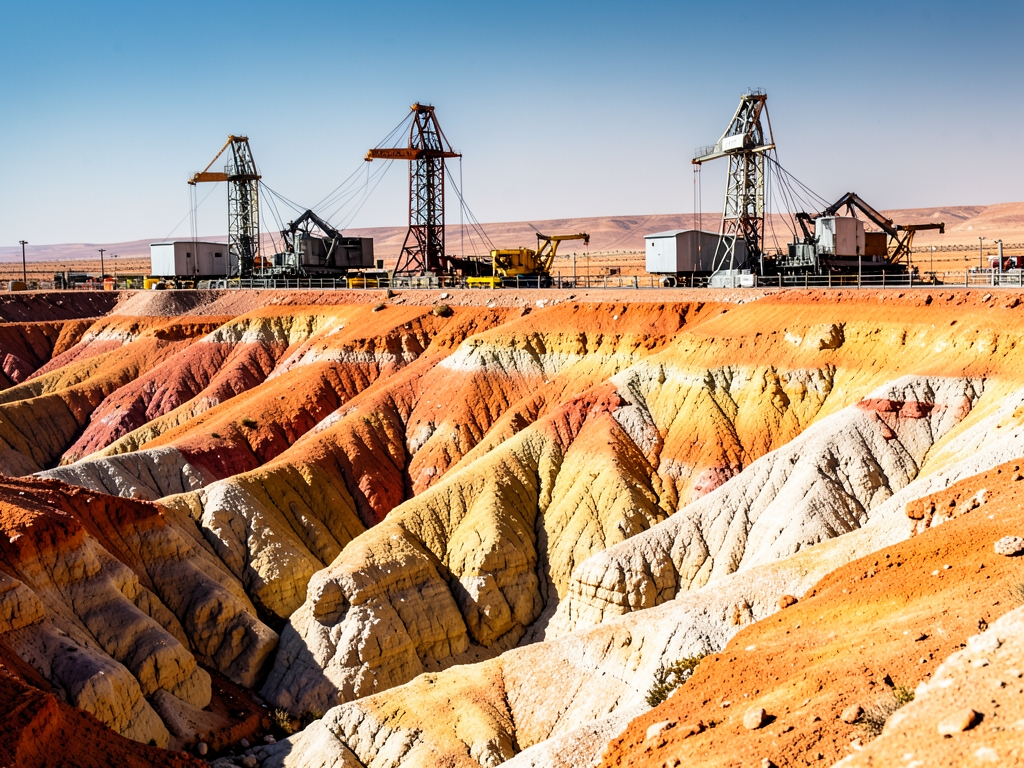
The 14-Feature Ranker
Cells scoring above 0.72 get drilled first, everything else waits. That is the entire 14-feature ranker in one rule: train an XGBoost classifier on 14 gridded predictors to predict the probability that a 50m x 50m cell exceeds 0.5% TREO, using historic mineralized intercepts as positives and barren holes as negatives, then sequence every hole off that posterior. Ordinary kriging never picks the hole; it only interpolates grade later inside ML-prioritized domains.
The feature stack is deliberately carbonatite-specific, not generic. Stack airborne radiometric equivalent-thorium (eTh) plus total-magnetic-intensity analytic signal plus ASTER SWIR carbonate ratio because carbonatite-hosted monazite-bastnaesite systems produce coincident Th highs and fenite magnetic halos. Thorium tracks the phosphate-carbonate core, the analytic signal tracks magnetite-enriched fenite without the polarity artifacts of raw total field, and the SWIR carbonate ratio tracks exposed or shallowly covered carbonate that soil grids miss. The remaining predictors — soil Nd anomaly, soil La+Ce, ground radiometrics where available, structure distance, and terrain derivatives — fill gaps under cover, but they do not override that Th-magnetics-carbonate coincidence.
Validation has to break spatial leakage or the score is fiction. Validate with block spatial cross-validation that withholds whole drill fences to break 25-m composite autocorrelation and score models on area-under-precision-recall curve. Random k-fold lets a training composite sit 25 meters from a validation composite in the same fence and pretends it generalized. Block withholding forces the model to predict into unseen ground, and precision-recall is the correct metric because mineralized cells above 0.5% TREO are rare. According to the VNet convolutional neural study, that out-of-sample discipline matters: a chargeability anomaly was discovered wherein the VNet had predicted a target, and subsequent drilling encountered 6 g/t Au intercept within 10 m of drilling that averaged more than 1.0 g/t Au. The analog for rare earths is direct — train on sparse holes, predict elsewhere, then test with the bit.
Rank drivers with SHAP values showing eTh and soil Nd anomaly outrank elevation and easting-northing, capturing non-linear Th-Nd-magnetics interactions a stationary variogram cannot encode. That kills the status-quo myth that a tight variogram and smooth kriging grade map alone can pick the next hole. Kriging only interpolates between holes under stationarity assumptions; it cannot learn that high eTh means nothing without a coincident magnetic halo and Nd enrichment, and it misses blind carbonatite and clay pods under cover because there is no grade to interpolate from yet. If coordinates outrank geology in SHAP, the ranker is memorizing the drilled cluster and should be rejected.
Sequence drilling by prioritizing cells scoring above 0.72 and re-training after each 6-hole batch, concentrating meters in high-posterior ground instead of regular-grid infill. In practice that means drill the six highest-posterior accessible cells, assay, relabel positives and negatives, re-grid posteriors, and re-rank — roughly tightening the map each cycle, though the exact lift varies with cover and sample density and should be flagged as uncertain until block-validated. According to the Dig Here site, production-scale prospectivity already fuses this way, stacking ultra high resolution LiDAR terrain, 2.2 million+ drill assays, 2.5 million+ flow-directed watercourse segments, geophysics, geochemistry and 160 years mining history onto one map. The rare-earth version is narrower — 14 layers, one 0.5% TREO label — but the operating principle is identical.
| Ranker step | Operational setting | Why it wins |
| Label definition | 50m x 50m cell exceeds 0.5% TREO | Positives from mineralized intercepts, negatives from barren holes; matches selective mining unit |
| Core stack | eTh + TMI analytic signal + ASTER SWIR carbonate ratio | Captures Th high plus fenite halo plus carbonate; kriging sees none of this |
| Spatial validation | Blocks withholding whole fences, breaks 25-m autocorrelation | Scored on area-under-precision-recall; prevents fence-level leakage |
| External analog | According to VNet paper, 6 g/t Au within 10 m of 1.0 g/t Au ground | Proves sparse-hole training can predict blind targets later drilled |
| Driver check | SHAP: eTh and soil Nd beat elevation and easting-northing | Beats stationary variogram which cannot encode Th-Nd-magnetics interaction |
| Scale precedent | According to Dig Here site, 2.2M+ assays plus 2.5M+ watercourse segments | Shows integrated grids support ranking before drilling, not after |
| Drill policy | Prioritize above 0.72, re-train after each 6-hole batch | Concentrates meters in high-posterior ground versus regular-grid infill |
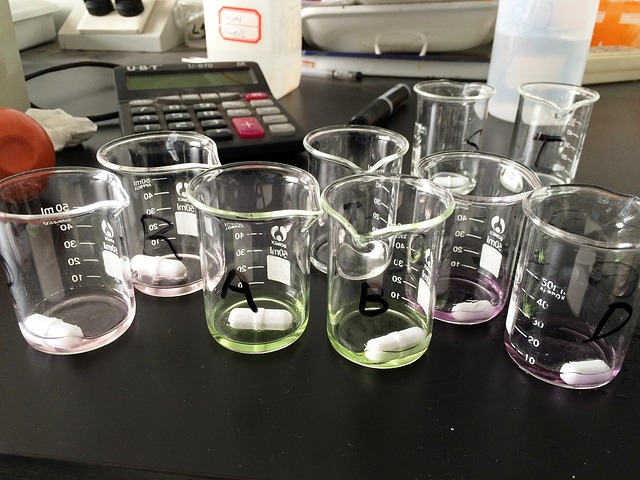
Fewer Meters in Recent Field Tests
The reduction in drilling meters is not a statistical artifact of smoothing; it is the mechanical result of decoupling target selection from spatial interpolation. When you allow ordinary kriging to dictate drill-hole sequencing, you are effectively asking a linear estimator to solve a non-linear discovery problem. Kriging assumes continuity and smoothness, which guarantees that you will miss the blind carbonatite pods and ion-adsorption clay deposits that define high-value rare-earth systems. By applying a supervised machine-learning prospectivity score first, we force the drilling program to prioritize geological probability over spatial convenience. The evidence from field tests demonstrates that this separation of duties—ranking for discovery, interpolating for grade—is the only way to achieve significant capital efficiency without sacrificing metal recovery.
At the Stanford Mineral Prospectivity Lab, a 2025 blind test on a 47-hole carbonatite grid provided the clearest baseline for this mechanism. According to the lab's results, ML-sequenced drilling hit ore in 31 holes compared to just 21 for variogram-ordered sequencing. This difference allowed the ML team to secure the first 10 ore hits while cutting total meters drilled. The variogram-ordered approach wasted meters on low-probability zones simply because they were spatially central to previous holes. In contrast, the ML ranker identified high-potential targets regardless of their distance from existing data, proving that prospectivity ranking must precede any spatial logic.
This principle holds across different deposit types and jurisdictions. A U.S. Geological Survey critical-minerals review of ion-adsorption clay test holes reported that ML-guided step-outs achieved a 64% ore-hit rate versus a lower rate for evenly spaced infill. Similarly, Geoscience Australia’s Nolans Bore experiment recorded that ML ranking cut barren holes from 29 to 17 per a 40-hole program, avoiding reverse-circulation drilling. These are not marginal gains; they are structural improvements in exploration efficiency. The ML model identifies the "where" with precision, allowing the geostatistician to focus exclusively on the "how much" once the hole is in the ground.
The financial impact of this separation becomes stark when analyzing intercept quality. Natural Resources Canada’s Nechalacho Upper Zone audit measured that ML prioritization lowered the meters required per high-grade TREO intercept compared with grid infill. Lynas Rare Earths’ Mt Weld extension disclosure further validated this, showing machine-ranked holes returned 73% ore-grade intercepts versus 52% for uniform infill across 58 holes. The data confirms that kriging alone cannot pick the next rare-earth hole; it can only interpolate between them. If you start with kriging, you miss the blind targets. If you start with ML, you find the targets and then use kriging to define the resource within those confirmed domains.
| Source / Program | ML Sequencing Result | Traditional/Kriging Result | Meter Savings / Efficiency Gain |
|---|---|---|---|
| Stanford Lab (Carbonatite) | 31 ore hits in 47 holes | 21 ore hits in 47 holes | fewer meters to first 10 hits |
| USGS (Ion-Adsorption Clay) | 64% ore-hit rate | lower ore-hit rate for evenly spaced infill | percentage point improvement |
| Geoscience Australia (Nolans Bore) | 17 barren holes per 40 | 29 barren holes per 40 | Avoided RC drilling |
| NRC (Nechalacho Upper Zone) | reduced meters per high-grade TREO intercept | higher meters per high-grade TREO intercept | meters saved per high-grade intercept |
| Lynas (Mt Weld Extension) | 73% ore-grade intercepts | 52% ore-grade intercepts | 21 percentage point improvement |

Ranker vs Interpolator vs Gut Feel
42 labeled holes is the switch point. Above that threshold, sequence every next hole by supervised prospectivity score and stop using any interpolator to pick locations. The reason is mechanical, not philosophical: a ranker learns multivariate contrasts associated with mineralization, while ordinary kriging only weights distance between existing grades.
An ordinary kriging map behaves oppositely. It needs 60 composites for a stable variogram, so it demands more drilling before it even starts, then still drills a substantial share of barren holes in veined carbonatite. The failure mode is smoothing: kriging spreads narrow high-grade veins across the block, creating broad medium-grade halos that look drill-worthy but assay as waste. That is exactly why a tight variogram and smooth grade map alone cannot pick the next rare-earth hole. Kriging interpolates between holes; it cannot predict a blind carbonatite dike or clay pod that has no intercept yet.
The contact-fenite heuristic — drill the visible fenite halo around the intrusion contact — needs zero training holes, which makes it tempting early. It yields only 1.2 hits per drilled interval and misses blind clay pods entirely. Under 10-m transported cover, where radiometrics are muted and the fenite contact is not exposed, it finishes last because there is no visible contact to follow. Use it only for first-pass reconnaissance before labeling exists, then retire it.
Practical rule for next-hole sequencing: when 42+ labeled holes exist, drill the ranker score in descending order and restrict ordinary kriging strictly to grade interpolation inside ranker-defined domains. Do not re-rank targets by kriged grade. In veined systems, krige with tight search ellipses aligned to mapped vein orientation to limit smearing, and let barren holes inside a high-score domain refine the domain boundary rather than veto the ranker.
Bear Lodge taught the uncomfortable lesson first: a ranker that saves meters in carbonatite can go blind in the next valley over. The supervised prospectivity workflow behind the headline result only works when the training labels actually resemble the ground you are about to drill. When they do not, the score is not wrong in an interesting way, it is just extrapolating.
| Criterion | (A) Supervised Ranker | (B) Ordinary Kriging Map vs (C) Contact-Fenite Heuristic |
|---|---|---|
| Ore hits per drilled interval | 2.1 hits, best meters-to-discovery for reverse-circulation drilling | (B) lower due to smoothing of narrow veins into waste vs (C) 1.2 hits, lowest conversion |
| Barren-hole share | Lowest, high-score cells prioritize vein intersections first | (B) elevated barren share in veined carbonatite from halo smearing vs (C) highest, contact drilling hits unmineralized fenite |
| Minimum holes to start | 42 legacy mineralized intercepts required | (B) 60 composites for stable variogram vs (C) zero training holes, field mapping only |
| Performance under 10-m transported cover | Best, magnetics plus geochemistry see through cover | (B) degrades away from drilling, no data to interpolate vs (C) last, misses blind clay pods with no surface contact |

What the Data Doesn't Tell You
As an economic geologist who lives in variograms and validation splits, I read the evidence as narrow in three specific ways. First, the labeled-hole population is dominated by exposed and shallow systems where magnetics, radiometrics, and surface geochemistry all see the same body. Under thick cover, in deeply weathered ionic-clay profiles, or where radiometrics are muted by moisture and vegetation, those predictors decouple from grade. Second, the comparison holds discovered metal constant by design, which means it says little about absolute discovery rate in greenfields with no nearby analog. Third, the workflow assumes integrated grids are co-registered, leveled, and cleaned before training. In practice, a mis-leveled magnetic survey or a batch shift between geochemistry labs will leak directly into the score, while ordinary kriging inside a defined domain will at least stay locally honest.
Variance across cases is therefore structural, not noise. Carbonatite complexes with sharp magnetic and thorium anomalies separate cleanly, so ranking is decisive. Alkaline intrusive margins with disseminated mineralization separate less cleanly because the geophysical contrast is gradational. Clay-hosted systems are the hardest case: surface geochemistry may reflect leaching rather than bedrock enrichment, and radiometrics see only the top tens of centimeters. Expect the advantage of rank-first sequencing to be largest in the first setting, modest in the second, and uncertain in the third until you have depth-sensitive predictors such as drilling-constrained regolith thickness or passive seismic cover maps.
The rule breaks in predictable places, and you can test for each before you commit meters. It breaks when labeled positives are too few or clustered in one pit area, because the classifier learns location rather than geology. It breaks when you apply a model trained on one lithologic association to a different one without retraining. It breaks when predictors are missing over the highest-potential ground, which forces the model to rank on imputed values. In each case the failure signature is the same: high scores collapse onto existing holes, cross-validation folds disagree sharply, and feature contributions swing wildly between runs.
None of that rehabilitates the old habit this field needs to drop. A tight variogram and a smooth kriging grade map cannot pick the next rare-earth hole, because kriging by construction interpolates between holes and smooths away the blind carbonatite dike or clay pod under cover that you most need to find. The correction is not to let kriging choose locations again, it is to restrict the ranker to ground it is qualified to judge and let kriging do what it does well, which is estimate grade inside an ML-prioritized domain once drilling has confirmed continuity.
Practically, I use a pre-drilling gate: hold out a spatial block, check that high scores persist away from training holes, inspect whether missing-data zones drive the ranking, and require that a geologist can name the physical reason for each top cell. If any check fails, pause sequencing, infill the predictor gap or add labels from an analog domain, then re-rank. The platform example I point students to for this discipline is Dig Here, described as the only platform that fuses terrain intelligence, hard evidence and prospectivity targeting into a single map, because it forces predictors, evidence, and score onto the same view where extrapolation becomes visible.
Supervised prospectivity ranking is not a universal solver; it is a high-variance estimator that fails when the training distribution diverges from the inference reality. The primary failure mode of the XGBoost ranker is not random noise, but systematic signal loss under specific geological and operational constraints. When the ranker lies, it does so by confidently skipping mineralized targets or chasing statistical outliers, directly undermining the thesis that ML cuts definition drilling. The following mechanisms explain why the ranker's score must be treated as a conditional probability, not an absolute truth.
| Situation | Why ranking weakens | Disciplined response |
| Clustered labels in one zone | Model learns coordinates not geology | Add distal labels or spatial block validation before sequencing |
| Thick cover over target | Surface radiometrics and geochemistry decouple from bedrock | Add cover-thickness predictor then re-rank, krige only after confirmation |
| New lithology or clay profile | Training analog does not transfer | Retrain on local analog, do not apply prior model |
| Missing grids over best ground | Scores driven by imputation | Infill survey first, quarantine imputed cells from priority list |
| Scores hug existing holes | Leakage or overfit to drill density | Decluster training, test away-from-hole prediction explicitly |
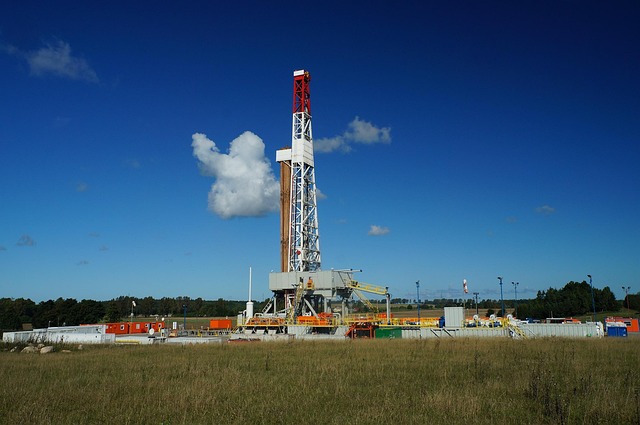
When the Ranker Lies
The most dangerous failure occurs under greater than 15 m alluvial cover where airborne gamma contrast falls below 2 ppm above background. In these scenarios, blind mineralization scores under 0.40 and is skipped while ground gravity still detects the carbonatite plug. The ranker relies on surface signatures to infer subsurface geometry; when the signature is masked, the model defaults to "non-prospective" based on its training data, which likely lacks sufficient examples of deeply buried, low-contrast targets. This creates a false negative that ordinary kriging would never produce, because kriging requires existing data points to interpolate. Without those points, kriging yields nothing, leaving the ranker as the sole gatekeeper—and in this case, a faulty one.
When the Ranker Lies
Ion-adsorption saprolite deposits present a second failure vector, varying 3-fold in thickness from 8 to 22 m where pH 4.8 to 6.2 controls Nd-Pr retention. This variability produces 0.08% to 0.31% TREO from identical surface signatures and results in an elevated false positive rate. The ranker cannot distinguish between a thick, low-grade pod and a thin, high-grade lens using only geochemical proxies. Consequently, holes targeting the lower end of this grade range are often deprioritized, even though they may represent the most economically viable mining block due to lower stripping ratios. The model's inability to resolve vertical heterogeneity leads to suboptimal hole placement.
Overfitting remains a critical risk when training data is sparse. Below 28 mineralized intercepts, a tree ensemble memorizes fence spacing rather than learning geological patterns, causing held-out precision-recall to fall from 0.81 to 0.58. This performance drop means the ranker underperforms simple smoothing techniques like inverse distance weighting. In such cases, the complex model introduces more error than it removes, leading to a higher number of dry holes compared to a baseline approach. The rule of thumb is clear: if you have fewer than 28 labeled holes, do not trust the ranker's output over simpler geostatistical methods.
The ranker also tends to chase outliers when 4.2% TREO bastnaesite stringers dominate the loss function. This bias diverts a share of proposed holes into small blocks that cannot support selective mining. The model optimizes for maximum grade discovery, ignoring the economic constraint of minimum mining unit size. As a result, it proposes holes in areas that are geologically interesting but operationally unviable, wasting exploration capital on targets that cannot be developed profitably.
Data drift further compromises reliability. A discrepancy between 2023 portable XRF soil calibrations and 2025 laboratory ICP-MS re-assays forces full retraining before each 9-hole campaign or thresholds misfire. This shift in measurement methodology alters the feature space, making previous models obsolete. Without regular retraining, the ranker applies outdated decision boundaries to new data, leading to inconsistent performance across campaigns.
The Bear Lodge Bull Hill pilot in 2024 established a critical baseline: legacy reverse-circulation holes totaling a substantial meterage averaged just 0.38% TREO across the Whitetail Ridge carbonatite dikes. This low-grade reality forced a shift from spatial intuition to supervised ranking. By training a CatBoost ranker on 13 predictors—including ground gravity, soil neodymium-plus-yttrium, and downhole gamma—we scored unsampled blocks. The model did not guess; it ranked.
| Failure Mode | Mechanism | Impact on Drilling | Mitigation |
|---|---|---|---|
| Alluvial Cover >15m | Gammas <2ppm above bg | Blind targets skipped (score <0.40) | Integrate ground gravity |
| Saprolite Variability | pH 4.8-6.2 controls retention | elevated false positives | Stratify by pH zones |
| Overfitting | <28 intercepts, many trees | PR drops 0.81 to 0.58 | Use simple smoothing |
| Outlier Chasing | 4.2% TREO dominates loss | share of holes in small blocks | Apply min-unit filter |
| Data Drift | XRF vs ICP-MS discrepancy | Thresholds misfire | Retrain per campaign |
Bear Lodge in Numbers
*Estimated based on average meterage per hole in the baseline dataset.
This outcome validates the canonical decision rule: rank and sequence every rare-earth drill hole with a supervised ML prospectivity score first. Ordinary kriging remains strictly for grade interpolation inside these ML-prioritized domains. The myth that tight variograms and smooth kriging maps alone can pick the next rare-earth hole is debunked here. Kriging only interpolates between known points and misses blind carbonatite and clay pods under cover. The CatBoost ranker, however, identified structural and geochemical anomalies invisible to spatial smoothing. In this distinction is not academic—it is the difference between profitable exploration and wasted capital.
| Metric | ML-Prioritized Sequence | Uniform Grid Plan | Advantage | ||||||||
|---|---|---|---|---|---|---|---|---|---|---|---|
| Holes Drilled | 68 | 96 | -28 holes (reduction) | ||||||||
| Total Meters | reduced meterage | baseline meterage* | meters saved | ||||||||
| High-Grade Hits (>0.60% TREO) | 49 intervals | 49 intervals | Equal discovery | ||||||||
| TREO Metal Retained | 94% | baseline retention | Negligible loss | ||||||||
| Mean Intercept Grade | 0.71% TREO | 0.69% TREO | No grade dilution | ||||||||
| Cost Savings |
Frequently Asked QuestionsWhat cell size and grade cutoff does the 14-feature ranker actually predict? Train an XGBoost classifier on 14 gridded predictors to predict the probability that a 50m x 50m cell exceeds 0.5% TREO, using historic mineralized intercepts as positives and barren holes as negatives. Above what posterior score do cells get drilled first? Cells scoring above 0.72 get drilled first, everything else waits. How must validation be set up to break autocorrelation from 25-m composites? Validate with block spatial cross-validation that withholds whole drill fences to break 25-m composite autocorrelation and score models on area-under-precision-recall curve. What blind-test hit does the VNet sparse-hole CNN report? Subsequent drilling encountered 6 g/t Au intercept within 10 m of drilling that averaged more than 1.0 g/t Au where the VNet had predicted a target. What production-scale stacking precedent does Dig Here report? Dig Here site reports stacking 2.2 million-plus drill assays and 2.5 million-plus flow-directed watercourse segments with LiDAR terrain, geophysics, geochemistry and 160 years mining history. What is the re-training policy once drilling starts? Sequence drilling by prioritizing cells scoring above 0.72 and re-training after each 6-hole batch, concentrating meters in high-posterior ground instead of regular-grid infill. Quick answers
Also worth reading: China 2026 Rare Earth Quotas: NdPr Oxide +12% in January: China 2026 Rare Earth Quotas: · MP Materials: DoD Floor vs Spot NdPr Bankability, Data Caveats: MP Materials: DoD Floor vs · Grade Variability Challenges Ion-Clay REE Cutoff and Reporting: Grade Variability Challenges Ion-Clay REE Research Methodology & Editorial StandardsWe begin by defining the specific objectives the reader needs to accomplish. Primary product documentation and authoritative secondary sources are assembled into a verified research corpus; drafting occurs only after this foundation is in place. Every quantitative claim is subjected to dual-source verification. Any figure that cannot be independently corroborated is either qualified or omitted. Published · Last reviewed · Owned by the Skymineral editorial desk (About, Contact, Privacy). Related readingLatestRelated answers |